- National
- Bangladesh
- Business
- International
- Sports
- Entertainment
- Politics
- Technology
- Life Style
- Religion
- Opinion
Tuesday, 17 March 2026

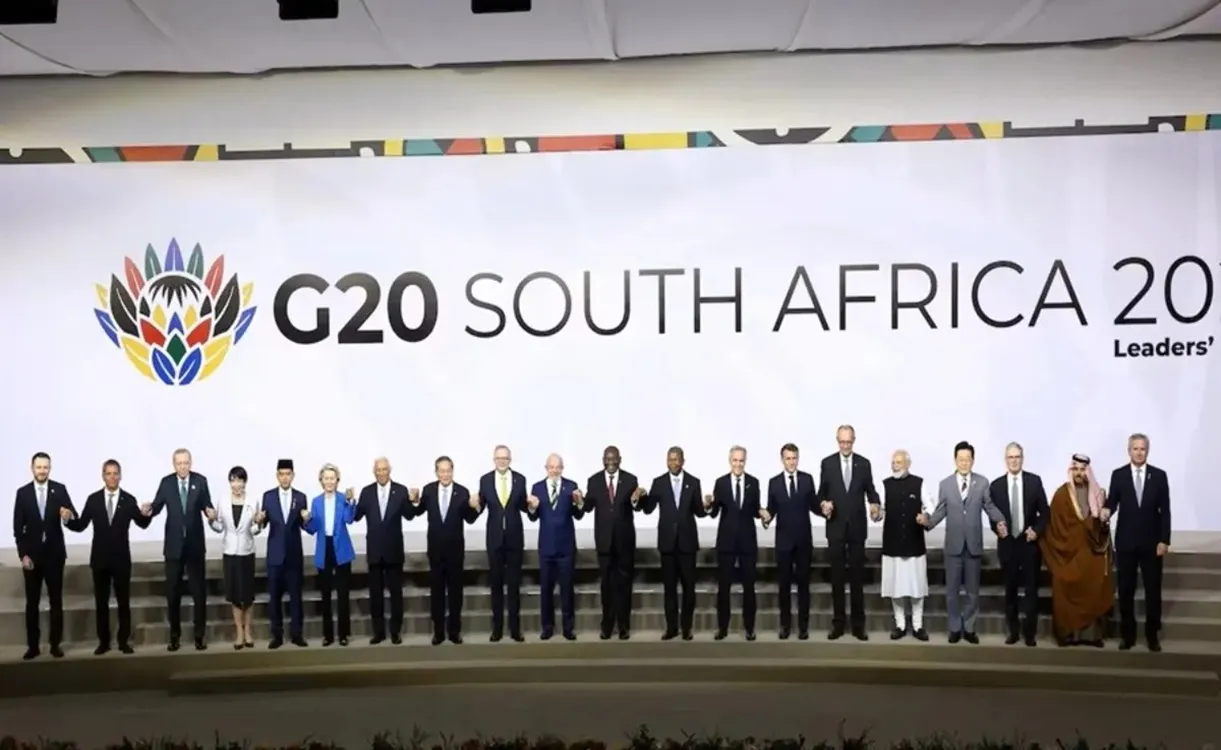
The Group of 20 (G20) leaders adopted a declaration addressing the climate crisis and other global challenges on Saturday during their summit in Johannesburg, South Africa. This adoption occurred despite consistent and robust objections from the United States administration, which boycotted the event.
South African President Cyril Ramaphosa's spokesperson, Vincent Magwenya, stated that the declaration, which was drafted without US input, "can't be renegotiated," highlighting significant strain between Pretoria and the US administration of President Donald Trump. Ramaphosa had earlier claimed there was "overwhelming consensus" for the summit declaration.
Hours after the adoption, the White House issued a strong statement through spokeswoman Anna Kelly, accusing South Africa of undermining the G20's founding principles. Kelly specifically charged that Ramaphosa was "refusing to facilitate a smooth transition of the G20 presidency" and had "weaponized their G20 presidency" by pushing the declaration despite US objections. President Trump is reportedly looking forward to "restoring legitimacy" to the group when the US holds the rotating presidency next year.
Adding to the complexity, Argentina, whose far-right President Javier Milei is a close ally of Trump, quit the negotiations at the last minute just before the envoys adopted the draft text. Argentine Foreign Minister Pablo Quirno stated that while Argentina could not endorse the declaration, it remained committed to the G20's spirit of cooperation. Quirno explained that Argentina's concern stemmed from how the document referred to geopolitical issues, specifically the "longstanding Middle East conflict" in a manner that "fails to capture its full complexity."
The document mentions the conflict once, committing members to work for "a just, comprehensive, and lasting peace in the Occupied Palestinian Territory." Ramaphosa proceeded with the declaration despite Argentina's withdrawal.
Comment