- National
- Bangladesh
- Business
- International
- Sports
- Entertainment
- Politics
- Technology
- Life Style
- Religion
- Opinion
- FIFA World Cup 2026
Thursday, 23 July 2026

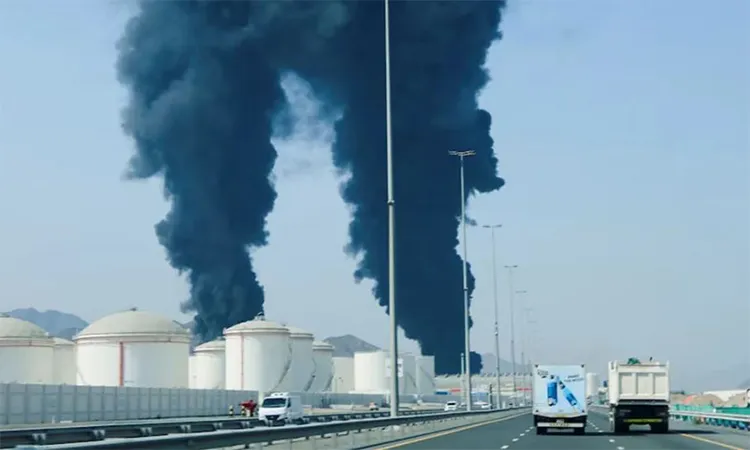
As the joint U.S.-Israeli military campaign against Iran enters its 18th day, the geopolitical landscape of the Middle East has shifted dramatically. Gulf Arab states, which initially hesitated to support the war, are now reportedly urging the United States to "neutralize" Iran’s military capabilities before ending the operation.
Sources close to the matter informed Reuters that Gulf leaders are increasingly concerned that an early ceasefire would leave Tehran with enough military power to continue threatening vital oil supply routes and regional economies.
Since the initial strikes on February 28, the conflict has widened. While Iran first targeted U.S. military bases, it has since launched extensive drone and missile attacks on civilian infrastructure across six Gulf nations, including major airports and oil installations.
"There is a widespread feeling across the Gulf that Iran has crossed every red line," said Abdulaziz Sager, chairman of the Saudi-based Gulf Research Center.
Simultaneously, Western diplomats reveal that Washington is pressuring Gulf allies to formally join the war effort. U.S. President Donald Trump is reportedly seeking "visible regional backing" to bolster the operation’s international legitimacy and maintain domestic support in the U.S.
For the Gulf states, the stakes are existential. A regional source noted a growing consensus: unless Iran’s offensive weaponry is permanently degraded, the entire region remains "hostage" to Tehran’s reach. The strategic goal has moved beyond a simple strike to a demand for the total paralysis of Iran’s ability to project power across the Strait of Hormuz.