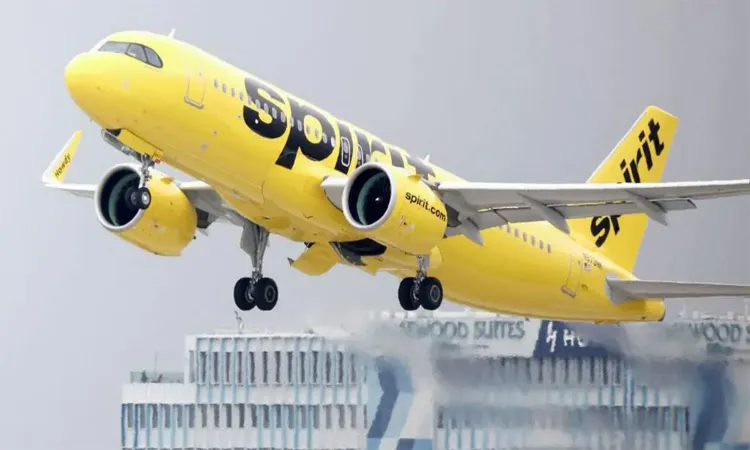
Spirit Airlines has announced a complete shutdown of operations after failing to secure a $500 million (£368m) bailout from the Trump administration.
The budget carrier, a pioneer of low-cost travel in the United States, officially began an "orderly wind-down" effective immediately on Saturday. The collapse marks the first major aviation casualty linked to the ongoing U.S.-Israel war in Iran, which has caused jet fuel prices to double in just two months.

Flight Cancellations and Refunds
All Spirit flights have been cancelled. The airline has advised passengers not to go to the airport.
Credit/Debit Bookings: Refunds will be processed automatically to the original form of payment.
Travel Agents: Passengers who booked through third parties must contact their agents directly.
Vouchers and Points: Compensation for bookings made via points or vouchers will be decided later through bankruptcy court proceedings.

The "Final Nail in the Coffin"
Spirit was already struggling to adapt to post-pandemic travel trends before the conflict began. However, the surge in oil prices—reaching $4.51 a gallon by late April—rendered the airline’s restructuring plans impossible.

President Donald Trump had personally proposed a $500 million rescue package in exchange for a 90% equity stake in the company.
However, the deal faced fierce opposition from Wall Street and within his own cabinet. U.S. Transportation Secretary Sean Duffy defended the decision to let the carrier fail, stating that a rescue would amount to "tossing good money after bad" and noting that no other airlines were willing to buy the struggling business.
Market Impact
Spirit’s exit leaves a significant gap in the U.S. aviation market, where it once held a 5% share. The airline was credited with keeping fares low by forcing major carriers to compete on price. In response to the shutdown, rivals such as JetBlue, Frontier, and American Airlines have introduced "rescue fares" to assist stranded passengers.
Industry analysts warn that Spirit may not be the last victim. With the International Energy Agency (IEA) warning that parts of Europe could run out of jet fuel within weeks, the global aviation industry remains on high alert.