European countries are seeking clarity about the United States’ strategy in the war with Iran as they consider whether to support calls from US President Donald Trump to deploy warships in the Persian Gulf.
During a meeting of European Union foreign ministers, Germany said the conflict should not involve NATO forces. German Foreign Minister Johann Wadephul said allies need to understand the United States’ military objectives and when the operation would end.
“We need more clarity,” Wadephul told reporters, adding that partners want to know the strategic goals behind the campaign.
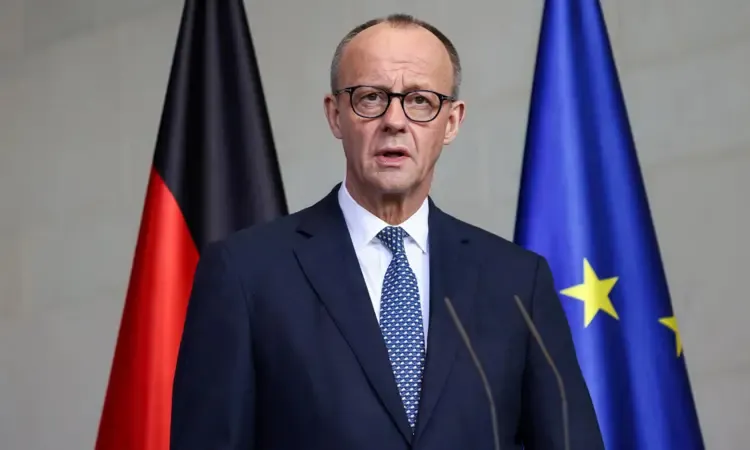
German Chancellor Friedrich Merz also ruled out Germany’s participation in the conflict. Speaking at a press conference in Berlin, he said the war lacks the legal mandate required under Germany’s constitution.
“We do not have authorization from the United Nations, the European Union or NATO,” Merz said. “From the beginning it was clear that this war is not a matter for NATO.”
Merz added that Germany was not consulted by either the United States or Israel before military operations began. As a result, there has been no discussion about sending German troops.
Germany’s government spokesperson, Stefan Kornelius, reiterated the same position. He said NATO is a defensive alliance and the current conflict does not fall within its mandate.
Meanwhile, other European leaders also expressed caution.
Estonian Foreign Minister Margus Tsahkna said European allies want to understand Washington’s long-term strategy before making decisions.
Polish Foreign Minister Radek Sikorski said any request for support should come through official NATO channels.
“If there is a formal request through NATO, we will consider it carefully out of respect for our American allies,” he said.

UK Prime Minister Keir Starmer said Britain does not want to be drawn into a wider war. However, he confirmed that London is working with partners on a plan to ensure security in the Strait of Hormuz after Iran effectively restricted shipping in the vital waterway.
The strait is a key global oil route, carrying about one-fifth of the world’s oil and liquefied natural gas shipments.
Trump has repeatedly urged allies to help secure the waterway after Iran responded to US-Israeli strikes with drone and missile attacks that disrupted tanker traffic.
The US president said he was “very surprised” by Britain’s initial reluctance to deploy naval forces.

According to Trump, the US had requested British assistance, including aircraft carriers and mine-clearing ships, but London was hesitant at first.
Trump also claimed that US forces have destroyed more than 30 Iranian vessels capable of laying sea mines in the Strait of Hormuz. However, he said Washington is still uncertain whether any mines were actually deployed.
“We hit all of their mine-laying ships, but we’re not sure if any mines were dropped,” Trump said.
He again called on allied nations to help reopen the shipping route, noting that some countries responded positively while others showed little enthusiasm.
Meanwhile, the Israeli military said it had launched a large wave of airstrikes on Iranian cities including Tehran, Shiraz and Tabriz.
In the wider region, Qatar reported intercepting another wave of Iranian missiles, while drone attacks in the United Arab Emirates caused fires at an oil facility in the city of Fujairah.