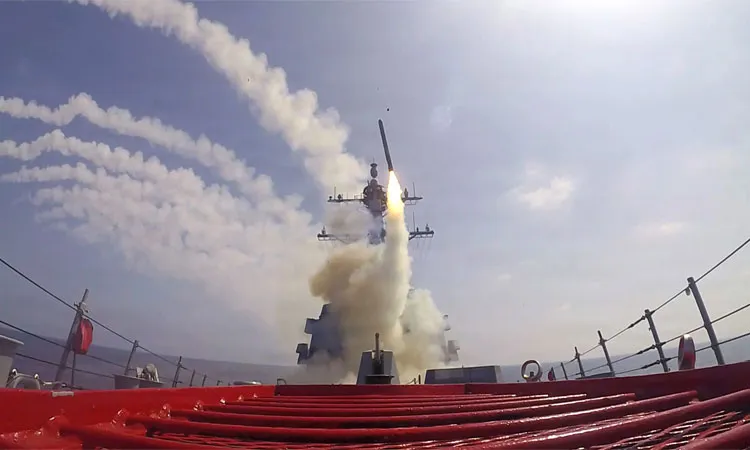
The U.S. war in Iran has cost $25 billion to date, a senior Pentagon official revealed Wednesday, offering the first official financial glimpse into a conflict that is increasingly weighing on the American economy and the Republican party’s electoral hopes.
Jules Hurst, performing the duties of the Pentagon comptroller, told the House Armed Services Committee that the bulk of the expenditure has been spent on munitions. The $25 billion figure—roughly equivalent to NASA’s entire annual budget—was welcomed by Committee Democrats who claimed they had been seeking a formal estimate for months.
However, the figure raised immediate questions. A previous administration estimate suggested the first six days of the conflict alone cost $11.3 billion. Hurst did not clarify if the new total includes the massive costs of repairing damaged base infrastructure across the Middle East.
A Political and Economic Quagmire
The conflict comes at a precarious time for President Donald Trump. With midterm elections six months away, Republicans are struggling to maintain their House majority as Democrats link the unpopular war to rising domestic costs.
Public support is cratering. A recent Reuters/Ipsos poll shows only 34% of Americans approve of the conflict, down from 38% in March. This dissatisfaction is fueled by a sharp rise in gasoline and fertilizer prices caused by disruptions to Middle Eastern oil and gas shipments. On Tuesday, U.S. gas prices hit a four-year high.
The Pentagon has deployed tens of thousands of additional troops and three aircraft carriers to the region. To date, 13 U.S. troops have been killed and hundreds wounded.
Fiery Defense Amidst Fragile Ceasefire
Despite the backlash, officials like Pete Hegseth have fiercely defended the intervention. In remarks to the committee, Hegseth attacked critics as "feckless" and "defeatist," arguing the expenditure is necessary to prevent Iran from obtaining a nuclear weapon.
The U.S. and Iran are currently observing a fragile ceasefire following the start of strikes on February 28.
Naval Confrontation in International Waters
In a separate development, the "Global Sumud Flotilla" reported that Israeli naval forces intercepted and disabled its vessels in international waters. Organizers claim hundreds of participants are now stranded on "powerless, broken" boats. With communications jammed and a storm approaching, activists warned of a burgeoning humanitarian crisis at sea.