- National
- Bangladesh
- Business
- International
- Sports
- Entertainment
- Politics
- Technology
- Life Style
- Religion
- Opinion
Tuesday, 12 May 2026

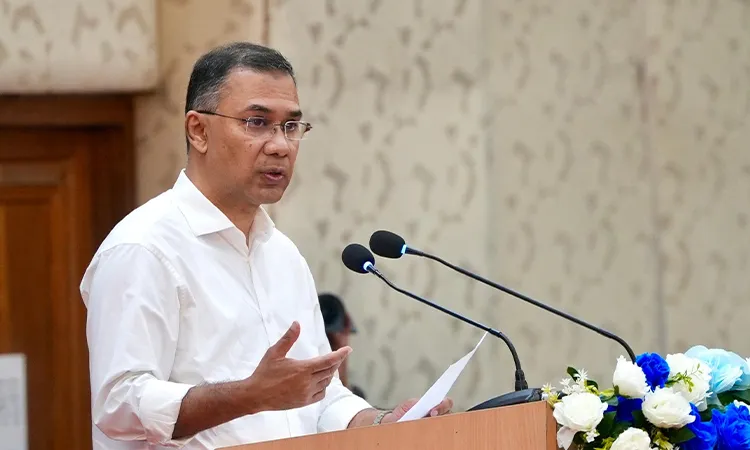
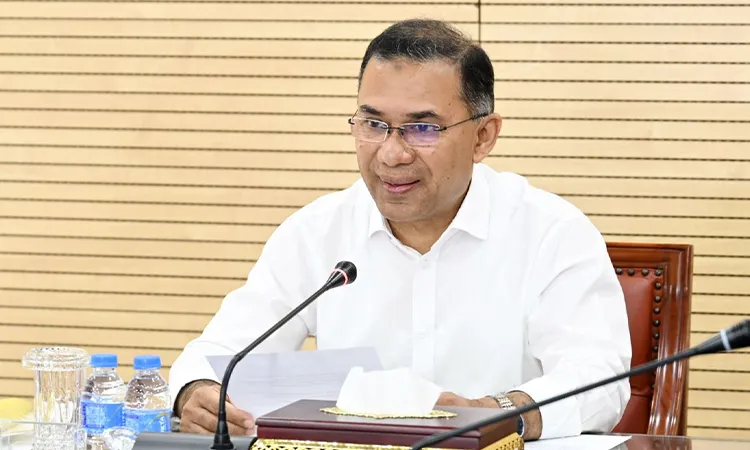
Prime Minister Tarique Rahman on Tuesday said Bangladesh must move away from rote learning and certificate-based education to meet the challenges of the Fourth Industrial Revolution and prepare students for future jobs.
He made the remarks while inaugurating the UGC National Workshop on Development and Sustainable Transformation of the Higher Education System in Bangladesh on May 12.
The Prime Minister said the country’s conventional education system must be reorganized to meet the demands of the Fourth Industrial Revolution. He noted that education is no longer limited to personal development, as technology-driven learning now plays a major role in economic growth, innovation and global competitiveness.
He stressed the need for stronger collaboration between universities and industries so that industry demands are reflected in academic curricula.

Tarique Rahman said modern education is no longer confined to schools, colleges or universities. Different fields of knowledge are increasingly interconnected, with areas such as data science, biology, engineering and sociology influencing one another.
Referring to rapid technological changes, he said artificial intelligence, robotics, automation, the Internet of Things, biotechnology, cybersecurity, quantum computing and nanotechnology are reshaping both society and the global job market. While new technologies are reducing traditional jobs, they are also creating new employment opportunities, he added.
The Prime Minister expressed concern over the global standing of Bangladeshi universities, saying they have yet to achieve expected levels in research, innovation and international rankings.
“In global university rankings, research publications, citations and innovation receive significant importance. Universities must focus more on research and innovation alongside textbook-based education to remain competitive,” he said.
He also urged university authorities to involve successful alumni at home and abroad in supporting research and innovation activities.
Highlighting graduate unemployment, Tarique Rahman said many university graduates remain jobless because they lack practical and professional skills alongside academic qualifications.
He said the government believes curriculum reform — from primary to higher education — is essential to ensure work-oriented and values-based education.
To modernize higher education, the government has taken steps to expand apprenticeships, internships and industry-academia partnerships. Initially, universities in divisional cities will work more closely with local industries and educational institutions to provide students with practical training.

The Prime Minister said the government has also introduced plans to provide competitive seed funding and innovation grants to help students commercialize business ideas and encourage entrepreneurship on campuses.
He added that the government is planning to establish Innovation and Entrepreneurship Development Institutes and Science Parks in higher education institutions. Plans are also underway to promote science fairs, innovation fairs and product-sourcing events in partnership with local and international organizations.
Technical and practical education will gradually be made mandatory from the school level to higher education, he added.