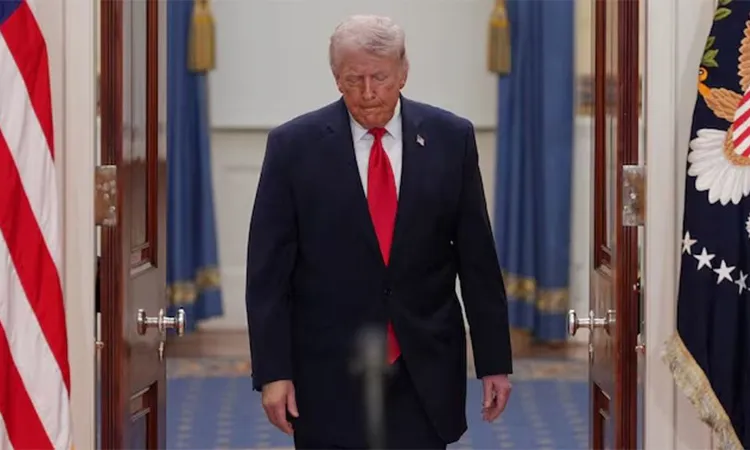
US President Donald Trump has temporarily stepped back from his hardline Middle East strategy after Washington suspended a planned military operation linked to the strategically important Strait of Hormuz only 24 hours after announcing “Project Freedom.”
Analysts describe the move as a significant diplomatic and military setback for the Trump administration.
The development came as Iranian Foreign Minister Abbas Araghchi arrived in China on Wednesday, just one week before President Trump’s scheduled visit to Beijing. On the same day, the United States announced the suspension of its planned operation.
Professor Hongda Fan of Shanghai International Studies University said Trump faced strong international pressure and lacked a clear military path forward.
According to Professor Fan, the traditional US strategy of using threats to gain leverage did not succeed in this case. Global pressure to reduce tensions increased ahead of the expected summit between Trump and Chinese President Xi Jinping.
Analysts also believe China is now in a stronger position to act as a mediator because of growing mistrust between the US and Iran. Beijing could use its diplomatic and economic influence to help reduce tensions between the two countries.
The latest developments may also reshape the Middle East security landscape. Experts say regional countries are increasingly moving toward strategic autonomy, allowing them to make independent security and foreign policy decisions.
However, analysts warn that Iran could face serious consequences if diplomatic efforts fail. At the same time, many believe China may play an important role in narrowing the gap between Tehran and Washington during Trump’s upcoming visit to Beijing.