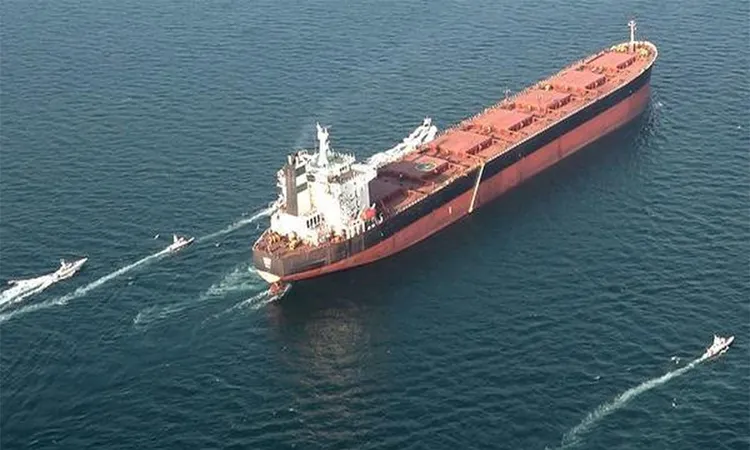
Iran’s Navy has issued a directive requiring all international vessels to use specific maritime corridors in the Strait of Hormuz designated by Tehran. The semi-official Fars news agency reported on Tuesday that any ship deviating from these routes will face a "decisive response."
This warning follows the release of a new map by the Islamic Revolutionary Guard Corps (IRGC), outlining an expanded "maritime control zone." This zone now stretches from Qeshm Island to Umm Al Quwain in the UAE, and from Kuh-e Mobarak to the south of Fujairah.

Ships Vanish from Tracking Systems
The situation in the world’s most critical oil chokepoint remains volatile. Following a surge in military activity on Monday, many commercial ships have turned off their Automatic Identification System (AIS) transponders. These devices are mandatory for safety, but crews are disabling them to avoid being targeted by drones or missiles.
Vessel-tracking data from MarineTraffic showed zero ships officially crossing the strait on Tuesday. However, experts note that "ghost transits" are likely occurring.
The Case of the Missing Tanker: A Chinese-owned tanker was spotted approaching the strait from the Gulf on Tuesday morning. Before entering the waterway, it switched off its transmitter and vanished from digital tracking.
Safety Risks: Experts warn that sailing without transponders in one of the world's most congested waterways significantly increases the risk of accidental collisions.
US vs. Iran: Conflicting Narratives
While the U.S. Navy claims to be successfully escorting vessels under "Project Freedom," Iran insists it maintains total control over the strait's corridors. Tehran has warned shipping companies and insurers that they must coordinate with Iranian authorities or forgo any security guarantees.
The standoff has essentially turned the Persian Gulf into a "cat-and-mouse" game for global shipping, as tankers attempt to navigate the blockade using irregular routes and evasive maneuvers.