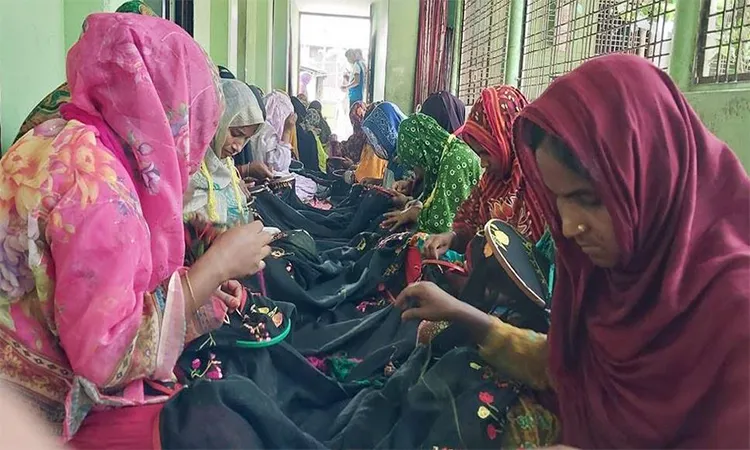
In the Jamtala area of Bhitarband Union in Nageshwari upazila, Kurigram, a quiet transformation is underway. Dozens of women are busy weaving sarees, designing clothes, and stitching garments—turning thread and fabric into a path toward self-reliance.
Some work on hand-tied sarees, others craft boutique-style three-piece outfits, while many operate sewing machines. Their shared goal is clear: to support their families, educate their children, and build a better future.
This initiative is led by Nadira Abul Qureshi, a Bangladeshi entrepreneur originally from Sylhet and currently based in the United States. Despite working in an IT firm abroad, she has remained committed to contributing to her country.
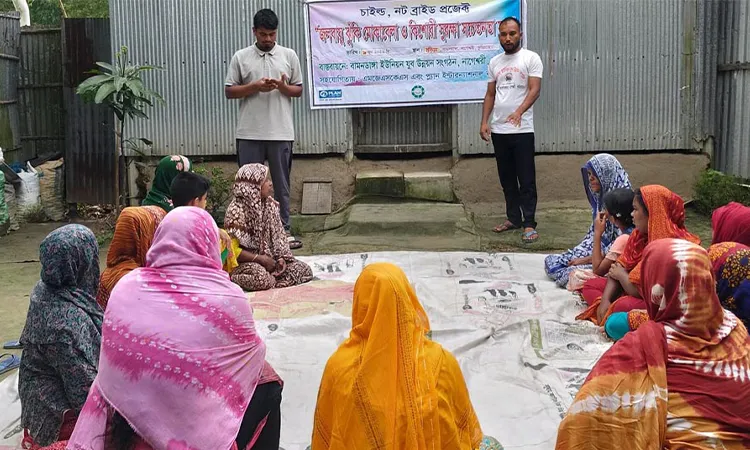
Through her project in Jamtala, around 90 women are receiving training in weaving, design, and garment production. National-level trainers are helping them develop practical skills, enabling them to produce marketable products.
The project also supports income generation. The products made by these women are sold across Bangladesh and exported abroad, helping boost both household earnings and the local economy.
To promote their work, Nadira has launched a brand called “Shati.” Under this label, locally made garments are reaching wider markets. Earnings from sales are returned directly to the women, improving their financial stability.
Beyond income, the initiative also focuses on education and skill development. Scholarships are provided to encourage girls to stay in school, and basic computer training is offered to expand future opportunities.
Hawa Khatun, a first-year honors student involved in the project, said she joined the training to support her family and continue her studies. Another participant, Sirajam Munira Mishti, said her husband is unemployed, and she hopes her work will bring financial stability and allow her children to receive an education.
Nadira Abul Qureshi said her goal is to make underprivileged rural women economically active. By equipping them with skills, she aims to help families become self-sufficient while contributing to the country’s economy.