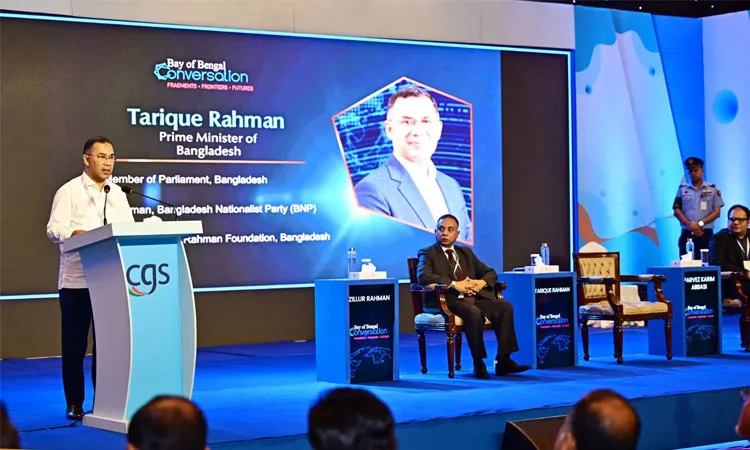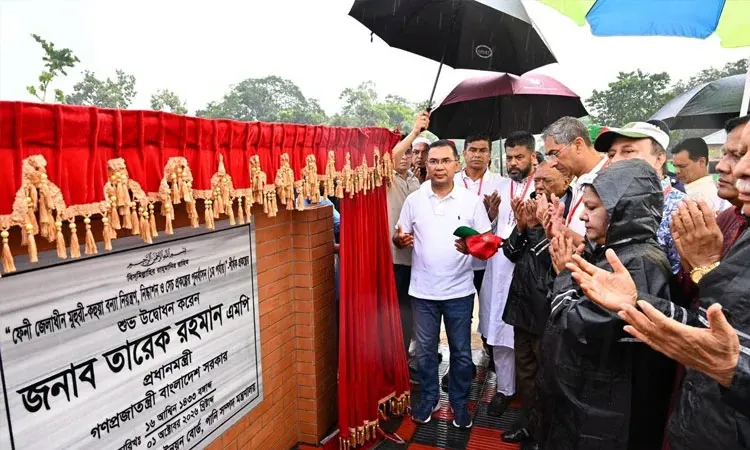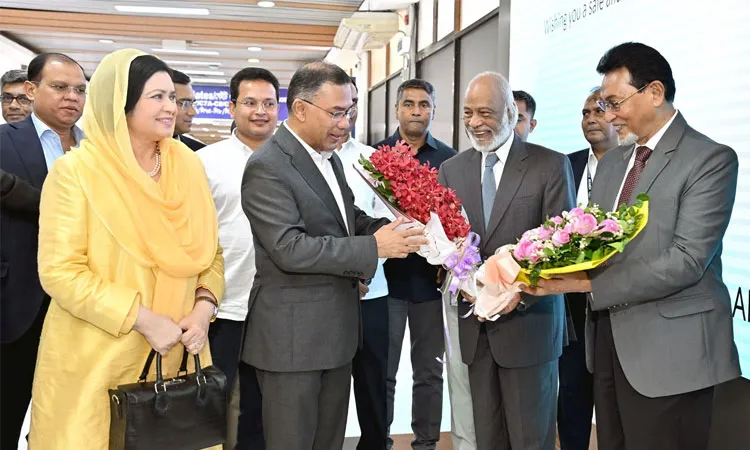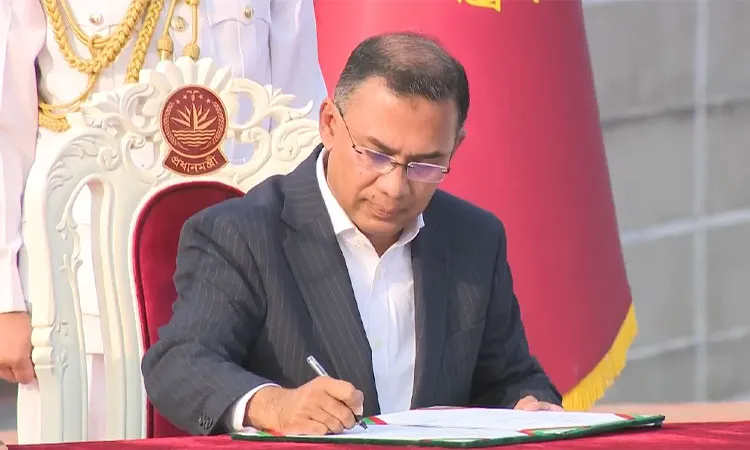
Tarique Rahman was sworn in as Bangladesh’s prime minister on Tuesday, marking a major political shift after his party’s sweeping victory in parliamentary elections.
Rahman, 60, the son of former Prime Minister Khaleda Zia and assassinated President Ziaur Rahman, takes office amid pressing challenges. These include restoring political stability, rebuilding investor confidence, and reviving key industries such as the garment sector after prolonged unrest following the Gen Z–led uprising that ended Sheikh Hasina’s rule in 2024.

The country was governed during the transition by an interim administration led by Nobel Peace Prize laureate Muhammad Yunus.
Breaking with tradition, the oath-taking ceremony was held outdoors at the South Plaza of the Jatiya Sangsad Bhaban, instead of the Bangabhaban, the president’s official residence. President Mohammed Shahabuddin administered the oath to Rahman and his cabinet in the presence of senior political leaders, diplomats, and civil and military officials. Delegations from China, India, and Pakistan also attended.
Rahman’s Bangladesh Nationalist Party secured a two-thirds majority, returning to power after nearly 20 years. Jamaat-e-Islami, contesting its first election since a 2013 ban was lifted, won a record 68 seats.
The Awami League was barred from contesting after the Election Commission revoked its registration. Jamaat and its allies, including the National Citizen Party led by youth activists from the anti-Hasina movement, will form the opposition.
Rahman’s rise follows a long and turbulent political journey. He returned to Bangladesh last year after 17 years of self-imposed exile in London, shortly before his mother’s death.
In his first remarks after the election, Rahman urged calm and restraint. “Peace, law and order must be maintained at any cost,” he said, calling on supporters to avoid retaliation and warning that chaos would not be tolerated.