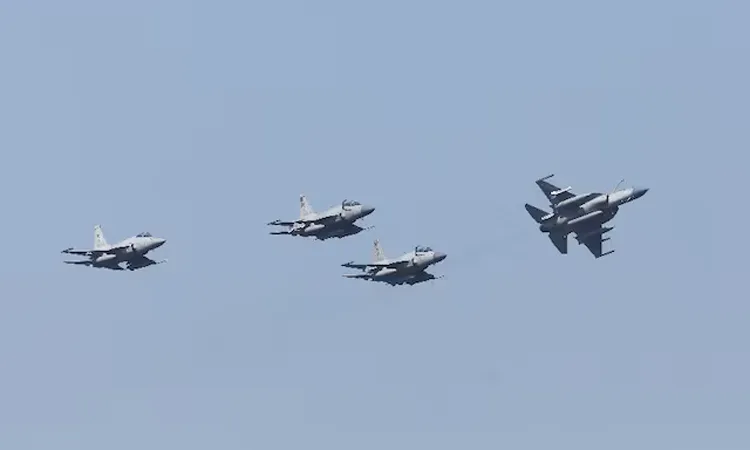
Pakistan has quietly deployed 8,000 troops, a squadron of fighter jets and an advanced air defence system to Saudi Arabia under a mutual defence pact. This major escalation in military cooperation comes even as Islamabad acts as the primary diplomatic mediator in the ongoing Iran war.
The full scale of the deployment—reported here for the first time—was confirmed by three security officials and two government sources. They described it as a substantial, combat-capable force designed to defend the kingdom against external attacks.
Pakistan's military, its foreign office and the Saudi government media office did not respond to requests for comment.
While the specific terms of the bilateral defence agreement signed last year remain confidential, both nations have stated it binds them to mutual defence. Pakistan's Defence Minister Khawaja Asif previously implied the agreement effectively places Saudi Arabia under Pakistan's nuclear umbrella.
According to highly placed sources, Pakistan sent a full squadron of roughly 16 fighter aircraft primarily Chinese-co-produced JF-17 Thunders to Saudi Arabia in early April. Two security officials added that Islamabad also dispatched two drone squadrons.
All five sources confirmed the deployment includes 8,000 personnel and a Chinese-made HQ-9 air defence system. The equipment is operated entirely by Pakistani personnel but financed by Riyadh.
Two security officials who reviewed the deployment logs stated that the personnel will primarily serve in advisory and training roles during the active Iran conflict. However, all three security officials noted that these forces supplement thousands of Pakistani combat troops already stationed in the kingdom under legacy agreements.
One government source familiar with the confidential text stated the pact allows for the deployment of up to 80,000 Pakistani troops to secure Saudi borders alongside local forces. The agreement also reportedly covers the deployment of Pakistani warships, though it remains unverified if any have entered Saudi waters.
Given the inclusion of combat jets, drones, and heavy air defences, sources emphasize this deployment is far more than a symbolic or advisory gesture.
Islamabad previously dispatched fighter jets to the kingdom immediately after Iranian strikes hit critical Saudi energy infrastructure, causing a Saudi civilian casualty.
This military positioning occurred just before Islamabad emerged as the war's central mediator, eventually brokering a temporary six-week ceasefire between Washington and Tehran. Islamabad hosted the maiden round of US-Iran peace talks, though subsequent rounds were called off.
The security landscape remains volatile, with unpublicized retaliatory strikes reportedly exchanged between Riyadh and Tehran. Historically, Pakistan has consistently provided military training and strategic muscle to Saudi Arabia, while Riyadh has routinely bailed out Islamabad financially during economic crises.