


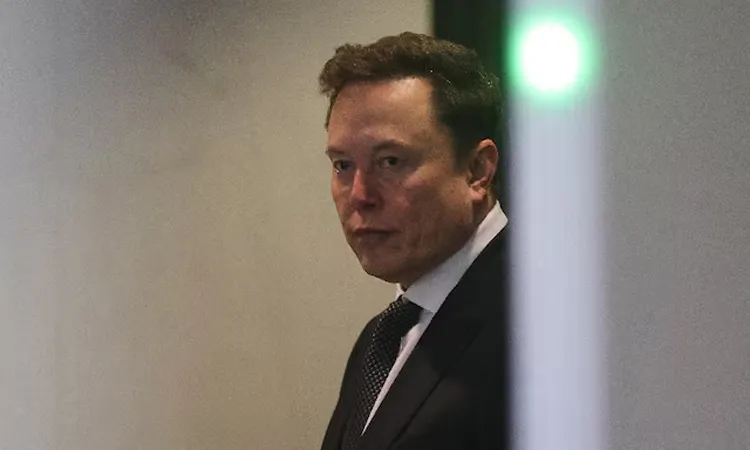
A US jury on Monday ruled against billionaire Elon Musk in his high-profile lawsuit against OpenAI. The jury found the artificial intelligence company not liable for allegedly abandoning its original mission to develop technology for the benefit of humanity.
In a unanimous verdict delivered in an Oakland, California federal court, the jury determined that Musk had brought his legal challenge too late.
The trial, which began on April 28, has been widely viewed as a defining moment for the future of artificial intelligence, raising critical questions over its ethical use, governance, and commercialization. AI tools are increasingly being integrated into global sectors—including education, finance, journalism, and medicine—while simultaneously fueling public anxiety over job displacement and deepfakes.
The verdict concluded 11 days of intense testimony and aggressive arguments that repeatedly targeted the credibility of both Musk and OpenAI CEO Sam Altman. Throughout the proceedings, each side accused the other of prioritizing financial gain over public interest.
In his closing argument, Musk's attorney, Steven Molo, focused heavily on Altman’s character, reminding jurors that several witnesses had questioned the CEO's honesty.
"Sam Altman's credibility is directly at issue," Molo argued. "If you don't believe him, they cannot win."
Musk’s legal team argued that OpenAI wrongfully enriched investors and insiders at the expense of its non-profit foundation, while neglecting critical AI safety measures. He further claimed that tech giant Microsoft entered its partnership fully aware that OpenAI had shifted its focus from altruism to profitability.
Conversely, legal counsel for OpenAI countered that it was Musk who was motivated by financial gain. They maintained that Musk waited too long to file a claim alleging that OpenAI breached its founding agreement to build safe, universally beneficial AI.
"Mr. Musk may have the Midas touch in some areas, but not in AI," William Savitt, a lawyer representing OpenAI, stated in his closing remarks.
OpenAI, which competes fiercely with major AI developers like Anthropic and Musk’s own xAI, is currently positioning itself for a potential initial public offering (IPO) that could value the company at $1 trillion. During the trial, a Microsoft executive testified that the corporation has invested over $100 billion into its strategic partnership with OpenAI.
Meanwhile, Musk’s xAI has been integrated into his aerospace firm, SpaceX, which is reportedly planning its own massive IPO that could potentially exceed OpenAI's valuation.

