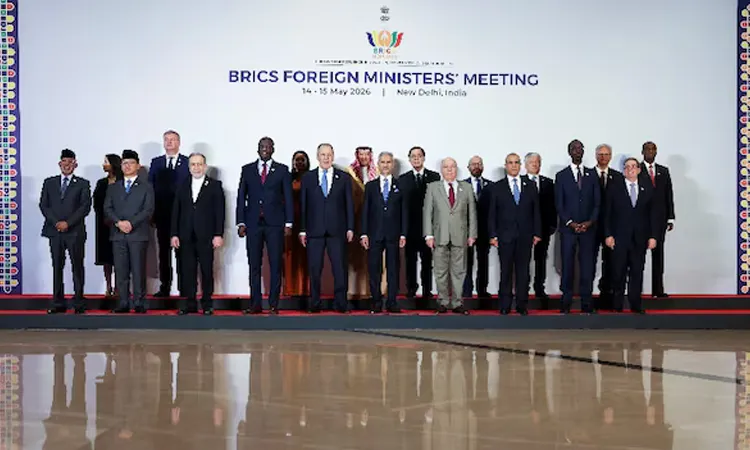
The two-day BRICS Foreign Ministers' Summit concluded on Friday without a joint declaration, highlighting deep internal divisions over the ongoing conflict in the Middle East. Host nation India was forced to issue a "Chair’s Statement" after members failed to reach a consensus.
The primary friction involved Iran and the United Arab Emirates (UAE). Tehran sought a formal condemnation of U.S.-Israeli military actions and accused the UAE of assisting in operations against Iran. The UAE, in turn, categorically rejected these claims and condemned repeated Iranian drone and missile attacks on its civilian infrastructure since the war began on February 28.
Iranian Foreign Minister Abbas Araghchi claimed a specific member blocked the joint statement. While he stated Iran has "no difficulty" with that country, he defended strikes on American military installations located on Gulf soil.
In a sharp response, UAE Deputy Foreign Minister Khalifa Shaheen Al Marar labeled Iranian actions as "terrorist attacks" and accused Tehran of obstructing global trade through the Strait of Hormuz.
As the world’s third-largest oil consumer, India has been severely affected by the instability in the Strait of Hormuz. The summit took place under a cloud of tragedy, following the sinking of an Indian-flagged ship this week and the deaths of at least three Indian personnel in the waterway.
Prime Minister Narendra Modi, visiting the UAE on Friday, condemned the attacks on the Gulf nation as "unacceptable" and praised the UAE's restraint.