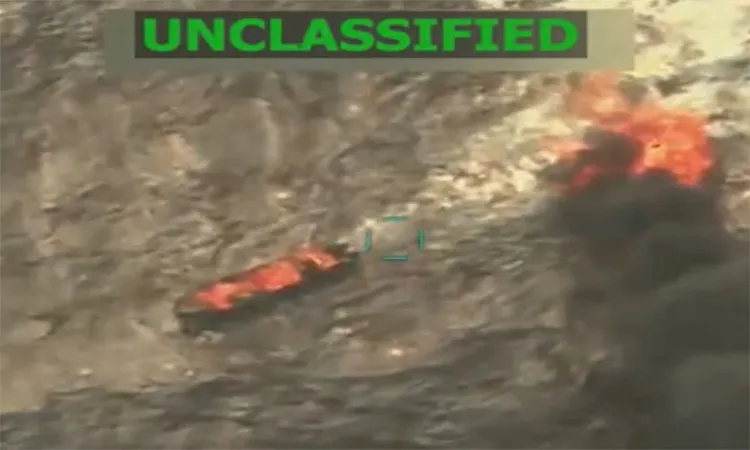
A collaborative five-month journalism investigation has uncovered the identities of 13 previously unnamed victims killed in U.S. military strikes targeting alleged drug-smuggling vessels in the Caribbean and eastern Pacific.
The report, led by the Latin American Center for Investigative Journalism (CLIP) and involving 20 journalists, reveals that the deceased were not high-level drug lords. Instead, they were "flesh-and-blood" young men from impoverished communities across Latin America and the Caribbean, driven into precarious work by extreme poverty. In several instances, the victims were local fishers with no verified ties to illicit trade.
The U.S. maritime campaign has claimed 194 lives over the past eight months. The Trump administration has consistently defended the operations, labeling the targets as "narco-terrorists."

However, CLIP director María Teresa Ronderos stated that the strikes have failed to curb the flow of narcotics into the United States. Instead, they have devastated local coastal economies. "There are communities where they stopped fishing for several weeks because they were terrified of being bombed," Ronderos said, adding that even if targets were transporting contraband, "there is no death penalty for cocaine trafficking."
Legal experts and international observers have cast doubt on the tactical validity of the operations. Brian Finucane, a former U.S. State Department lawyer and current senior adviser at the International Crisis Group, characterized the strikes as a "military spectacle" rather than a serious counter-drug operation.
While the United Nations and various human rights organizations have condemned the maritime bombings as extrajudicial executions, U.S. Southern Command maintains that all strikes are "deliberate, lawful and precise."