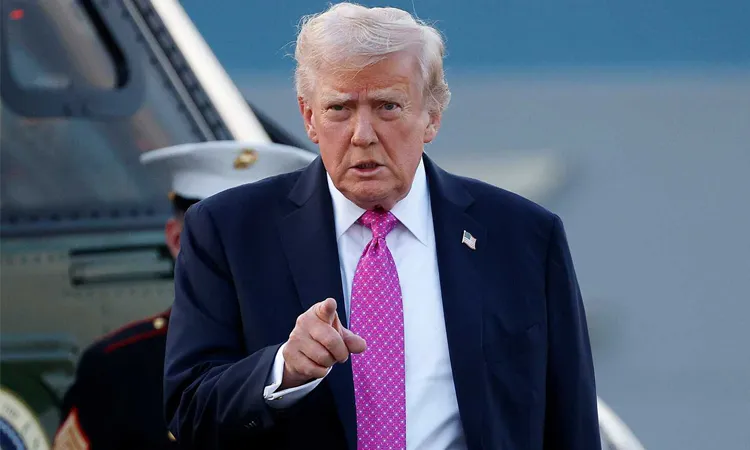
US President Donald Trump has announced that the United States will impose a 25 percent tariff on goods from countries that trade with Iran, a move that will add further dimension to three weeks of anti-government protests in Iran.
Trump made the announcement in a post on his social media account Truth Social on Monday (January 12). He took this step to further increase pressure on Iran. In the post, Trump wrote, "Any country doing business with the Islamic Republic of Iran will be required to pay a 25 percent tariff on all their trade with the United States. Effective immediately. And this order is final."
However, Trump did not elaborate on how "doing business with Iran" would be defined. The White House did not provide additional information on which countries' imports would be most affected by the decision.
According to the economic database Trading Economics, Iran's main trading partners are China, Türkiye, the United Arab Emirates and Iraq.
The move is expected to increase pressure on Tehran as anti-government protests in Iran enter their third week.
The announcement of the new tariffs comes as Trump has threatened military intervention in Iran if protesters are killed. White House spokeswoman Carolyn Levitt said on Monday that military options, including airstrikes, were still "on the table."
Meanwhile, the death toll in the crackdown on protests in Iran has risen to at least 648, the Norway-based human rights organization Iran Human Rights (IHRNGO) said on Monday.
According to the organization, nine of the dead were under the age of 18. The organization also said that thousands of people have been injured in the past 16 days of protests, in addition to the large number of deaths.
Earlier on Sunday, the US-based human rights organization HRANA reported that 544 people had been killed in the protests in Iran. At the same time, the organization said that more than 10,600 people had been arrested during this period.
The movement began on December 28 with small demonstrations in several markets in the capital Tehran over the economic crisis. It later spread across the country. Young people and ordinary people, angry about price increases, high inflation, and the devaluation of the rial, took to the streets.