- National
- Bangladesh
- Business
- International
- Sports
- Entertainment
- Politics
- Technology
- Life Style
- Religion
- Opinion
Friday, 01 May 2026

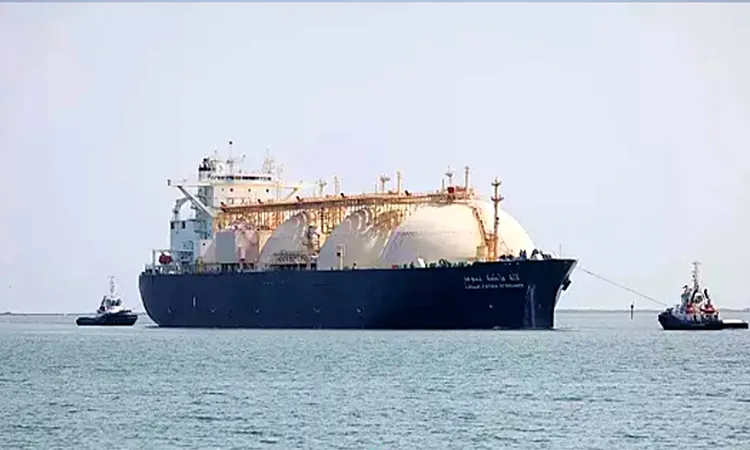
Despite rising instability near the Strait of Hormuz, eight ships carrying essential fuel and gas have successfully reached Chattogram Port, providing temporary relief for Bangladesh’s energy supply. Two additional vessels are currently positioned within Bangladeshi territorial waters.
These tankers, carrying Liquefied Natural Gas (LNG) and Liquefied Petroleum Gas (LPG), arrived near Kutubdia and Maheshkhali on Sunday morning (March 8). Port sources confirm that the 10 ships—comprising those already docked and those in transit—carry approximately 4.5 million tons of fuel.
According to the Chattogram Port Authority, the fleet includes four LNG carriers and two LPG vessels, alongside four ships transporting diesel and other petroleum products. Notably, five large LNG cargoes originated from Qatar. These include the French-flagged Al Zur (63,383 units), the Greek-flagged Al Jassia (63,075 units), and the Bahamian-flagged Lusail (62,987 units).
Two other vessels, Al Galael and Labrethah, carrying 57,665 and 62,000 units of LNG respectively, are currently awaiting offloading. Uniglobal is serving as the local agent for these shipments.
Regarding LPG imports, two Panamanian-flagged vessels—LPG Sevan (22,172 units) and GYMM (19,316 units)—arrived from Oman’s Sohar Port, managed by Unique Maritime. Additionally, the Liberian-flagged Bay Yasu anchored with 5,019 units of MEG from Fujairah, UAE.
Chattogram Port Secretary Syed Refaet Hamim noted that these vessels crossed the Strait of Hormuz before February 28, allowing them to bypass recent transit disruptions. However, several other fuel tankers remain stranded at various Middle Eastern ports.
To ensure a stable domestic supply and prevent panic buying, the Bangladesh Petroleum Corporation (BPC) has implemented a temporary rationing system for fuel sales at petrol pumps, effective since last Friday.
Comment