
- National
- Bangladesh
- Business
- International
- Sports
- Entertainment
- Politics
- Technology
- Life Style
- Religion
- Opinion
Saturday, 16 May 2026

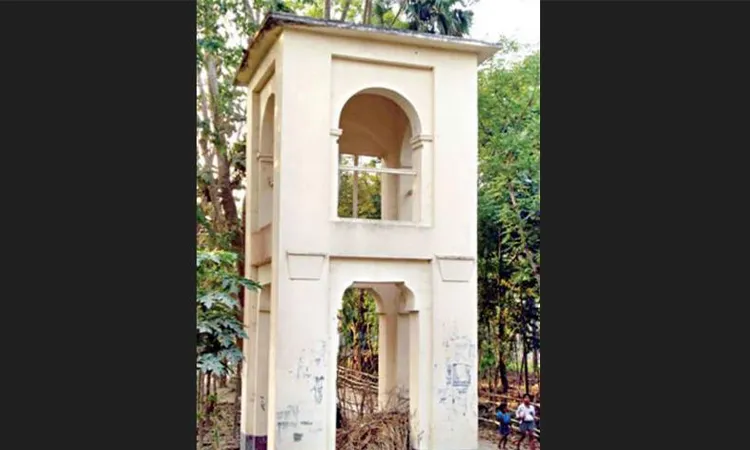
During the zamindari era, feudal landlords were key patrons of art, literature, and culture. To project authority and ensure personal comfort, they constructed grand estates across the country. A defining architectural feature of these estates was the Nahabatkhana (music pavilion), typically built right above the main entrance.
These elevated pavilions hosted musicians who played traditional instruments, making the Nahabatkhana central to feudal entertainment. One such historic structure still survives in the traditional village of Itna in Lohagara, Narail.
Local elders recall that these pavilions were originally tall wooden structures, though some—like the one in Itna—were built with durable, eye-catching brickwork.
A distinct class of musicians, comprising both Hindu and Muslim artists, thrived around these pavilions. Performing in harmony, they entertained landlords and ordinary subjects alike, playing classical ragas at dawn and dusk. During major festivals like Durga Puja, musicians held competitive recitals, earning special rewards from the landlords. The zamindars fully funded these artists, covering their salaries and family expenses.
A typical Nahabatkhana housed a diverse array of local and foreign instruments, including the Shehnai, flute, dhak, dhol, khol, tabla, harmonium, cymbals, premjudi, mandolin, and clarinet. The grandeur of a pavilion directly reflected the wealth and prestige of its owner. Beyond zamindars, wealthy kings, maharajas, jotdars, gatidars, and talukdars also built them to showcase their aristocratic lineage.
Following the abolition of the zamindari system, these pavilions fell into neglect. Without maintenance, most lost their splendor and crumbled into ruin, though a few still dot the country's rural landscape.
Narail's surviving Nahabatkhana sits at the entrance of the Banerjee Bari on the banks of the Madhumati River, roughly eight kilometers southeast of the Kundashi intersection in Lohagara upazila.
Built of brick, the structure still exhibits intricate craftsmanship. Tarun Banerjee, brother of local businessman Basudeb Banerjee, shared its history: "Our grandfather, Manmathanath Banerjee, was a Gatidar and Talukdar under the estate of Rani Rashmoni. He built this elaborate Nahabatkhana in front of our ancestral home to entertain his family and the local community."
After the feudal system ended, the pavilion fell into deep disrepair. "We later renovated it independently to introduce the younger generation to our local heritage," Tarun added. Today, the sound of music still echoes from this historic pavilion during Durga Puja and other traditional family celebrations.
