


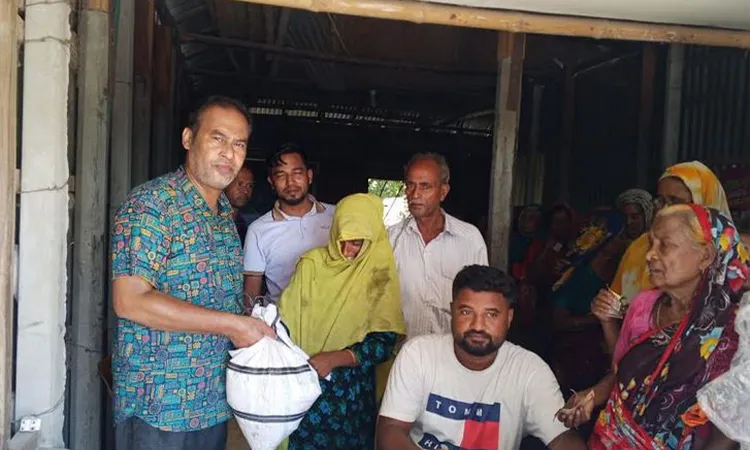
Thousands of low-income residents in Bogra’s Sariakandi Upazila, particularly those living in remote riverine chars, are facing severe food insecurity as the Open Market Sale (OMS) program remains a seasonal rather than year-round service.
While Sariakandi Municipality is home to laborers, rickshaw pullers, and domestic workers from 12 unions, the subsidized food grain allocation is only available for a few months each year. Locals report that when OMS operations cease, they are forced to buy rice and flour at market prices that are often double or triple the subsidized rate.
According to the Sariakandi Food Regulatory Office, the upazila currently falls under "special allocation" rather than "general allocation." Last year, rice was distributed for only five months and flour for two. While six dealers are currently distributing one ton of rice each, the activity is set to expire this month.
"I manage my family by buying OMS rice and flour. When it stops, our costs double," said one local buyer. "No one is thinking about us. Hunger makes all other problems feel small."
Unlike neighboring Kahalu and Shibganj upazilas, which enjoy year-round general allocations, Sariakandi’s supply is inconsistent despite its high concentration of vulnerable "char" inhabitants.
Local dealers, including Mozaffar of Sariakandi Municipality, noted that the demand for flour is particularly high but cannot be met due to lack of supply.
Bogra District Food Controller Saiful Kabir Khan acknowledged the crisis. "Since Sariakandi is a riverine area with a high poverty rate, I will inform higher authorities to arrange a permanent general allocation," he said.
Member of Parliament for Bogra-1, Alhaj Kazi Rafiqul Islam, stated he was previously unaware the allocation wasn't year-round. "Arrangements will be made so that the people of Sariakandi and Sonatala receive the general allocation. This service must be available to the poor consistently," he promised.

