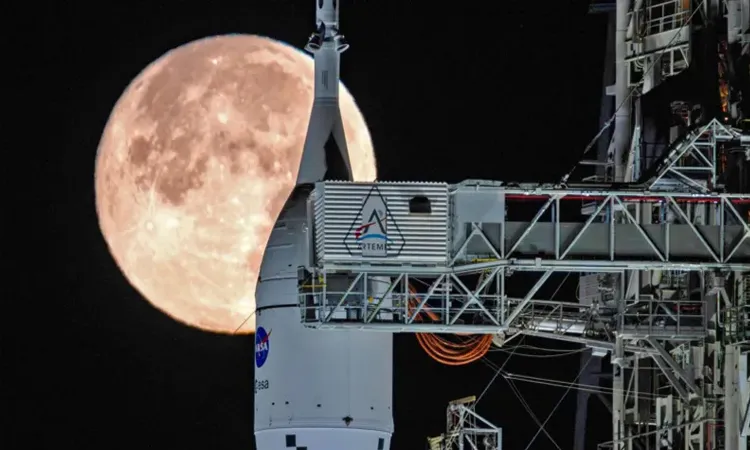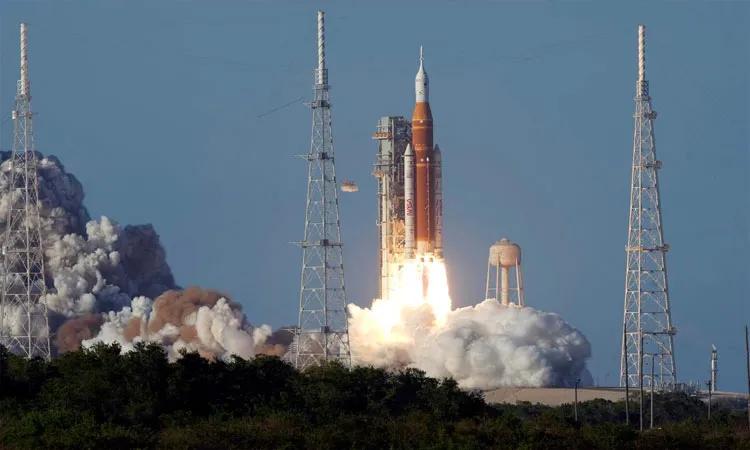
After more than five decades, humans have begun a new journey beyond low Earth orbit into deep space. NASA’s Artemis II lunar mission launched successfully from Cape Canaveral, Florida, on Wednesday (April 1). The 32-storey rocket lifted off from the Kennedy Space Center, drawing thousands of spectators to witness the historic moment.
The mission marks a key step in NASA’s long-term plan to establish a human presence on the Moon and eventually send astronauts to Mars.
The four-member crew includes NASA astronauts Reid Wiseman, Victor Glover, Christina Koch, and Canadian Space Agency astronaut Jeremy Hansen. They are expected to orbit the Moon and return to Earth during the nearly 10-day mission.
About five minutes after launch, mission commander Wiseman reported from the capsule that they were witnessing a “beautiful moonrise” and heading toward the Moon.
Despite earlier concerns about hydrogen leakage, NASA proceeded with the launch after safely loading about 700,000 gallons of fuel. Launch Director Charlie Blackwell-Thompson said the mission reflects the courage of the Artemis team and the hopes of a new generation.
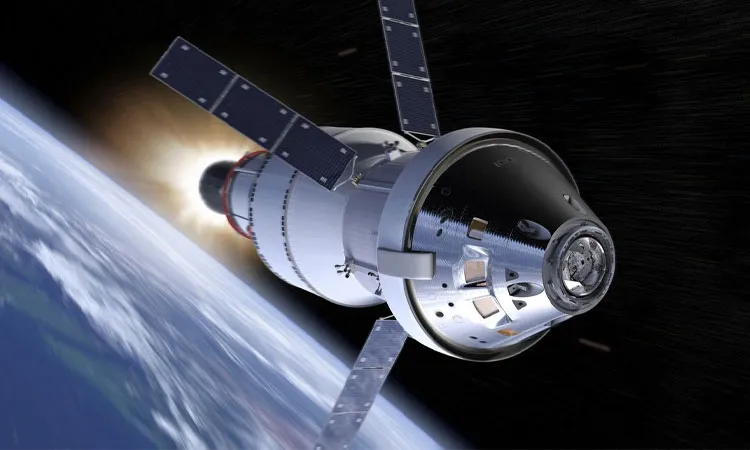
In the early phase, the crew will spend one to two days in high Earth orbit to test the spacecraft’s life-support, propulsion, navigation, and communication systems. Once confirmed, the Orion spacecraft will perform a powerful engine burn to leave Earth’s orbit and head toward the Moon.
Orion will follow a “free-return” trajectory, using the gravitational pull of the Earth and Moon to complete its journey efficiently. At its farthest point, the crew will travel farther from Earth than any astronauts in decades.
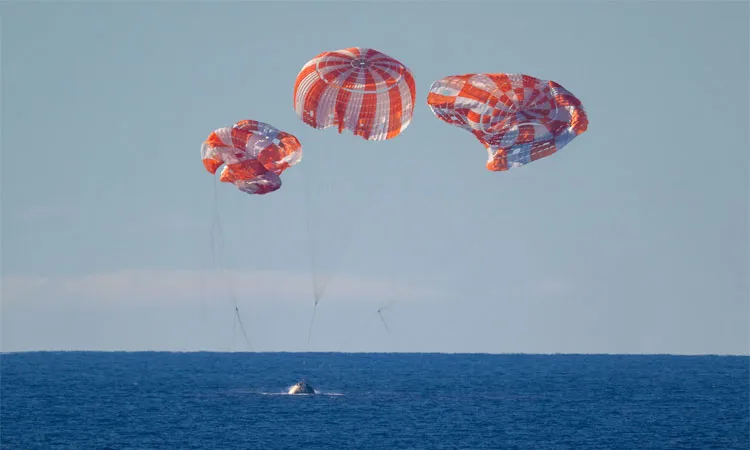
After circling the Moon, the capsule will re-enter Earth’s atmosphere at around 40,000 km/h before splashing down in the Pacific Ocean.
NASA science chief Nikki Fox noted that more than half of today’s global population was born after the Apollo missions, making Artemis a defining space mission for the current generation.
NASA hopes this mission will pave the way for astronauts to land on the Moon again in the coming years, renewing global interest in space exploration after 50 years.