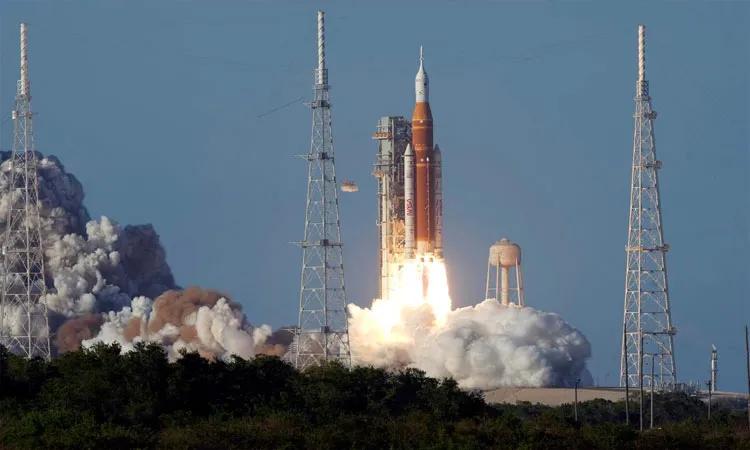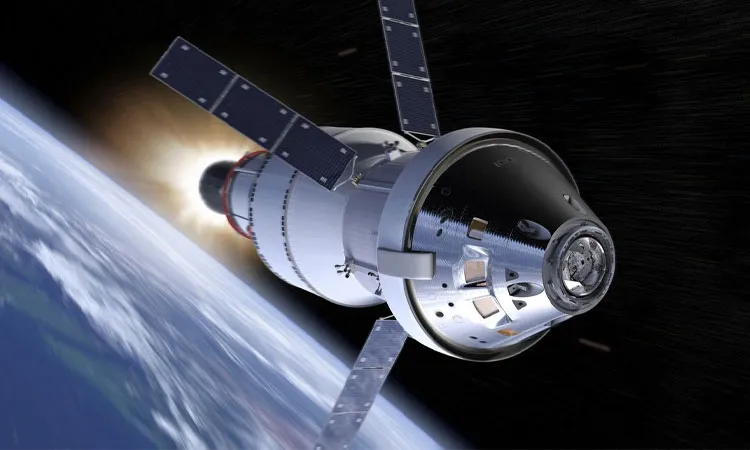
The four astronauts of NASA's Artemis II mission entered the moon's gravitational sphere of influence early Monday. They are currently navigating the shadowed lunar far side, on track to become the farthest-flying humans in history.
The crew—NASA astronauts Reid Wiseman, Victor Glover, Christina Koch, and Canadian astronaut Jeremy Hansen—will reach their maximum distance from Earth by 7:05 p.m. ET. At roughly 252,757 miles away, they will surpass the 56-year-old distance record set by the Apollo 13 crew.

The lunar flyby, officially starting at 2:34 p.m. ET, will plunge the Orion capsule into darkness. The crew will experience brief communication blackouts as the moon blocks signals to NASA's Deep Space Network. During this six-hour window, the astronauts will photograph the silhouetted moon and capture a rare "Earthrise" as our planet emerges from the lunar horizon. A dedicated team of scientists at NASA's Johnson Space Center will monitor their real-time observations.
Ahead of the flyby, the astronauts are testing their Orion crew survival spacesuits, reviewing navigation data, and preparing for an outbound trajectory correction burn scheduled for 11:03 p.m. EDT to refine their path.
The crew is also conducting critical scientific observations. They will study 30 specific lunar targets, focusing heavily on the 600-mile-wide Orientale basin and the older, degraded Hertzsprung basin. Comparing the topography of these massive craters will provide scientists with fresh insights into lunar geology and impact evolution.
Artemis II is a crucial 10-day test flight for NASA. The multibillion-dollar Artemis program aims to return humans to the lunar surface by 2028, establishing a long-term base that will eventually serve as a stepping stone for future crewed missions to Mars.