- National
- Bangladesh
- Business
- International
- Sports
- Entertainment
- Politics
- Technology
- Life Style
- Religion
- Opinion
Saturday, 28 March 2026

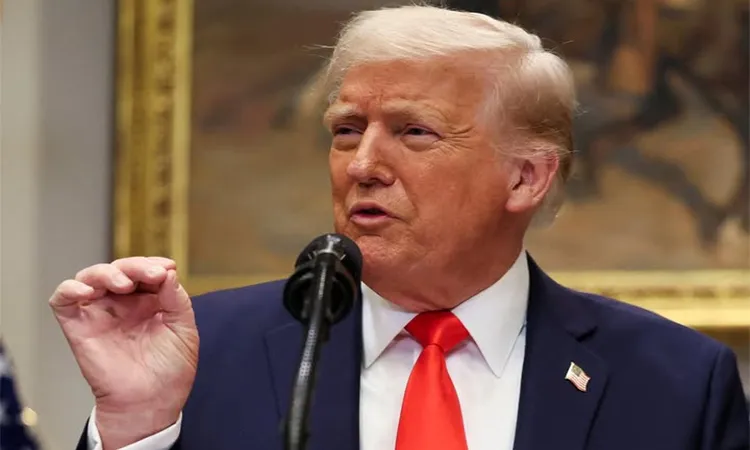
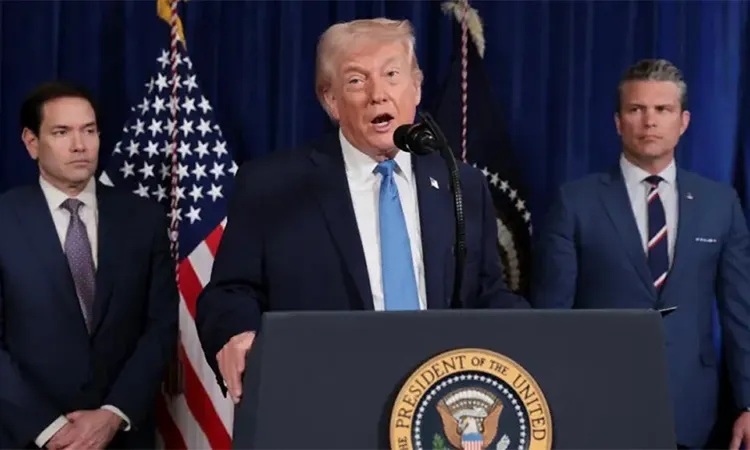
U.S. President Donald Trump has sparked international concern by suggesting that Cuba could be the next focus of American military action, following recent operations in Iran and Venezuela.
Speaking on Friday (March 27) at the Future Investment Initiative—a high-profile business summit held this year in Miami—Trump touted the expansion of U.S. military influence.
"I built this great military and said it would never have to be used, but sometimes it has to be used," Trump stated. "And let me tell you, Cuba is going to be the next target."
While the President immediately followed his remarks by jokingly asking reporters to "disregard" the statement, the comment comes amid a period of extreme tension. Washington has intensified a de facto oil blockade on the island, which has crippled Cuba’s aging power grid and triggered a series of nationwide blackouts this month. Cuba Braces for "Possible Aggression"
Havana has responded by placing its military on high alert. In an interview with NBC's Meet the Press on Sunday, Deputy Foreign Minister Carlos Fernández de Cossío confirmed that Cuba is preparing for a "possible military aggression."
"Our military is always ready, and that readiness has been increased," de Cossío said. He characterized any U.S. military move as illogical, noting that Cuba has "no quarrel" with the American people.
The rhetoric follows a period of significant regional shifts, including the U.S. capture of Venezuelan leader Nicolás Maduro in January, which severed Cuba's primary fuel supply.
U.S. Secretary of State Marco Rubio recently told reporters at the White House that Cuba's current leadership is "completely incapable" of solving the energy crisis. Rubio asserted that the socialist system is beyond reform and that "radical changes" in leadership are necessary to restore stability.
Diplomatic analysts suggest that while Trump’s rhetoric is often unpredictable, the precedent set by recent interventions in the Middle East and South America makes his "next target" comment a serious concern for Caribbean stability.
Comment