European Union governments have agreed to indefinitely immobilise Russia's frozen assets, valued at up to €210 billion, marking a significant step toward finalizing a plan to use the funds as collateral for a massive loan to support Ukraine.
The decision comes just ahead of a critical EU summit next week where leaders hope to agree on the financing mechanism. EU ambassadors unanimously agreed to indefinitely freeze Russia's Central Bank assets using an emergency clause (Article 122), removing the previous requirement for a unanimous six-month renewal vote. This decision is crucial as it reduces the recurring risk to countries like Belgium.
The EU is proposing to raise up to €90 billion, representing two-thirds of Ukraine's estimated need of €135.7 billion over the next two years. This money would be provided via a "reparations loan" backed by the interest generated from the frozen Russian assets, most of which are held at Belgian bank Euroclear (€185bn).
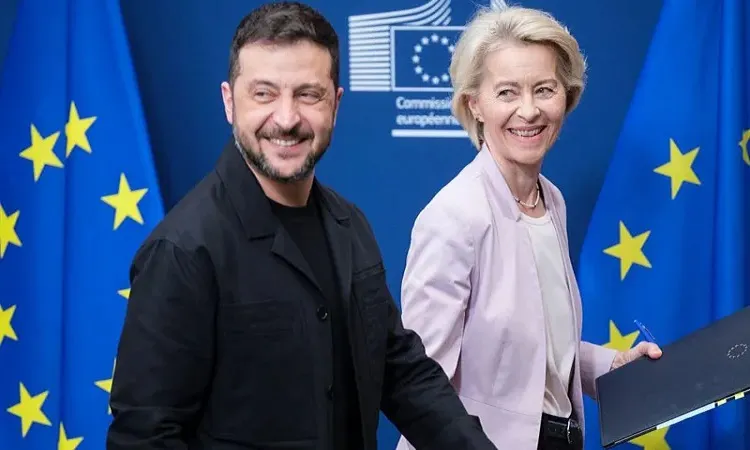
Ukrainian President Volodymyr Zelensky stated it is "only fair" that Russia's assets should be used for reconstruction. German Chancellor Friedrich Merz backed the move, saying the assets would "enable Ukraine to protect itself effectively."
The loan plan faces strong opposition from Moscow and legal reservations from Belgium. Russia's Central Bank announced on Friday it is suing the Belgian bank Euroclear in a Moscow court in response to the plan, calling the EU's use of the money "theft." Belgian Prime Minister Bart De Wever has demanded "water-tight guarantees" before accepting the plan, fearing that the small Belgian economy (GDP approx. €565bn) would be saddled with an enormous bill (€185bn) if the deal collapses or if Euroclear suffers losses in Russia (where Euroclear has €16-17bn immobilised).
Euroclear CEO Valérie Urbain has warned that using the assets could potentially "destabilise the international financial system," while financial law professor Veerle Colaert suggested forcing Euroclear to issue a loan might violate EU banking regulations. The European Commission is confident it has addressed Belgium's concerns by planning a guarantee covering the entire €210bn of Russian assets, and any losses Euroclear suffers in Russia would be offset by Russian clearing house assets held in the EU.
An alternative proposal, preferred by Belgium, is to raise the €90 billion on capital markets backed by the EU budget. However, this requires unanimous consent and faces opposition from Hungary and Slovakia, who object to funding Ukraine's military.
There are concerns among European figures that the US may propose a separate "peace plan" that involves using Russia's frozen assets differently, potentially earmarking a significant portion for a joint US-Russia investment project, a scenario the EU's indefinite freeze aims to complicate.
Comment