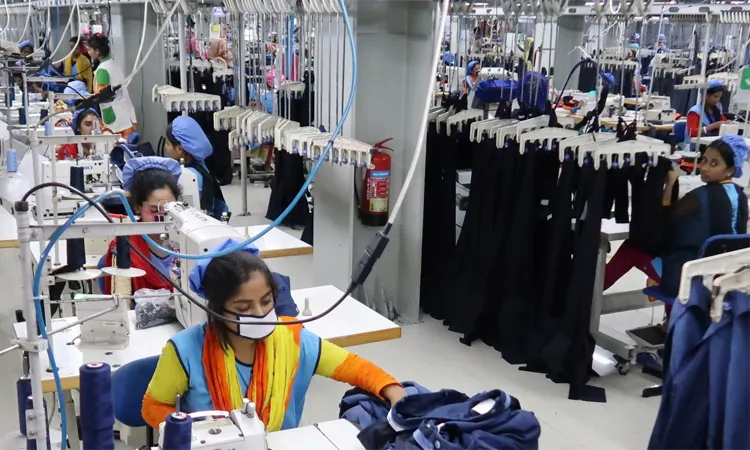
Rooftop solar installations could meet up to 14% of the total electricity demand in Bangladesh’s ready-made garment (RMG) sector, yet current solar generation accounts for a mere 3%.
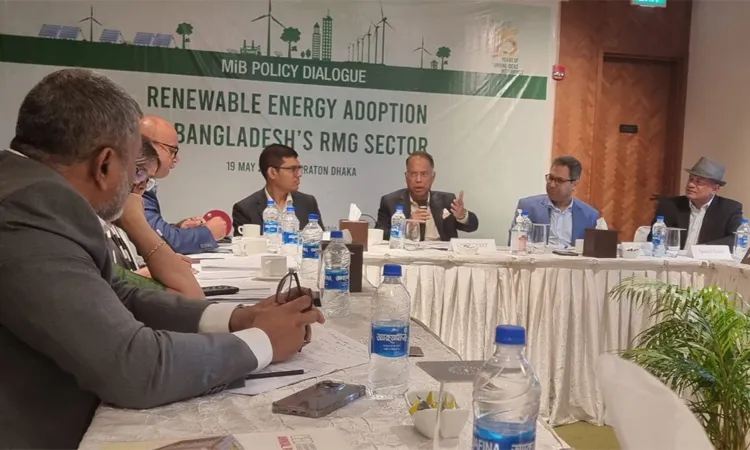
These findings were revealed in a new survey of 878 export-oriented garment factories conducted by Mapped in Bangladesh (MiB), a digital platform implemented by BRAC University’s Centre for Entrepreneurship Development. The report was launched on Tuesday (May 19) in Dhaka.
The study, conducted between mid-2023 and 2024 across factories in Narayanganj and Gazipur, highlights the sector's heavy reliance on traditional energy. Currently, 61.5% of factory energy consumption comes from the national grid, and 36% from captive power systems. Alarmingly, 80% of factories source less than 1% of their energy from renewables, with only 5% of factories sourcing more than 10%.
Bangladesh Garment Manufacturers and Exporters Association (BGMEA) Director Sheikh Mustafiz warned that SME entrepreneurs must urgently adopt renewable energy to survive. “Major buyers, including H&M, have set targets for supplier factories to reduce carbon emissions by 25%. If entrepreneurs fail to shift, they will face serious challenges,” he said, noting that financing remains the primary barrier.
Addressing the event, Power, Energy and Mineral Resources Minister Iqbal Hassan Mahmood outlined the government's ambitious plan to generate 5,000 megawatts (MW) of electricity from solar energy within the next five years.
To achieve this, the government plans to withdraw import taxes on various solar equipment. However, the minister noted that a bonded warehouse system may be introduced for these imports to prevent misuse of the duty-free facility. The government is also pushing for private-sector support to install rooftop solar systems across Dhaka, which the minister claimed could generate an equivalent of 5,000 MW alone if fully implemented.
Despite the shift toward renewables, the minister cautioned that under the current economic circumstances, further increases in electricity prices are unavoidable.