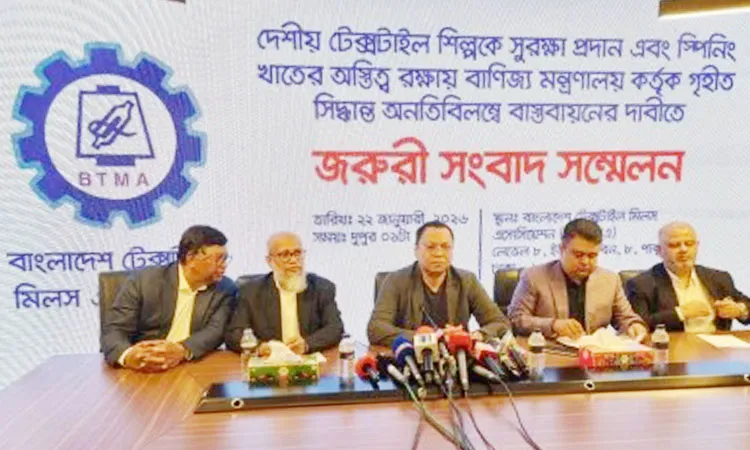
The Bangladesh Textile Mills Association (BTMA) has announced an indefinite shutdown of all textile mills nationwide starting Feb. 1, citing the interim government’s failure to protect domestic yarn-producing spinning mills.
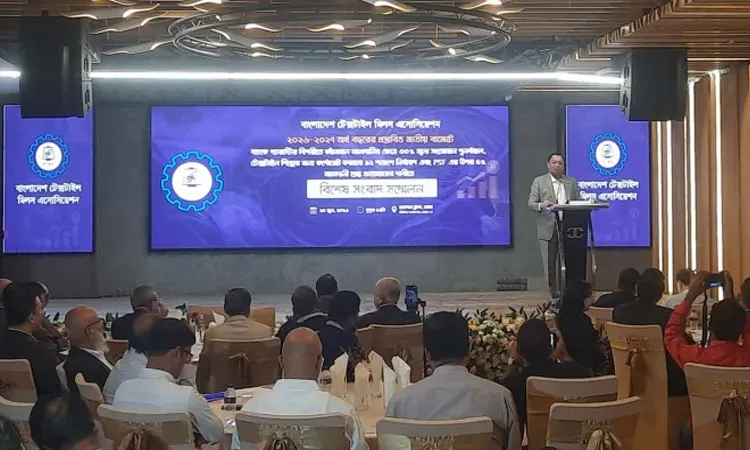
The announcement was made at a press conference at the association’s office in Dhaka’s Karwan Bazar on Jan. 22.
BTMA President Showkat Aziz Russell said the industry can no longer operate under current conditions. “We will shut down no matter what. We do not have the capacity to repay bank loans,” he said.
Russell said the association has approached multiple ministries and departments but received no effective support. “Every department is shifting responsibility to others,” he said.
He added that the industry’s capital base has fallen by about 50 percent, leaving mill owners unable to service their debt. “Even if we sell all our assets, it will not be possible to clear bank loans,” he said.
Senior BTMA leaders attended the briefing. The decision follows a request by the Ministry of Commerce on Jan. 12 to the National Board of Revenue to suspend duty-free yarn imports under the bonded warehouse system. The move was aimed at supporting local spinning mills.
Garment and knitwear exporters, however, warned that ending duty-free imports would sharply raise production costs. Industry leaders said import duties could rise to about 37 percent, adding an estimated $0.30 to $0.60 per kilogram of yarn.
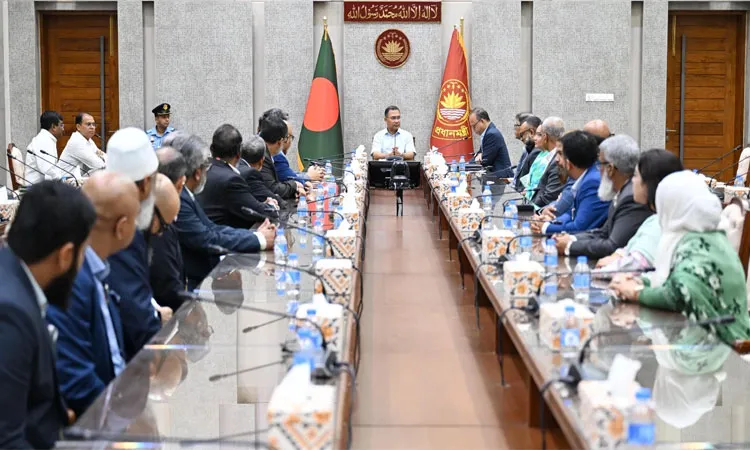
The proposal triggered a standoff between textile millers and exporters. Representatives of the Bangladesh Garment Manufacturers and Exporters Association (BGMEA) and the Bangladesh Knitwear Manufacturers and Exporters Association (BKMEA) met Commerce Adviser SK Bashir Uddin to seek a review of the plan. BTMA leaders held separate talks with the finance adviser, but no agreement was reached.
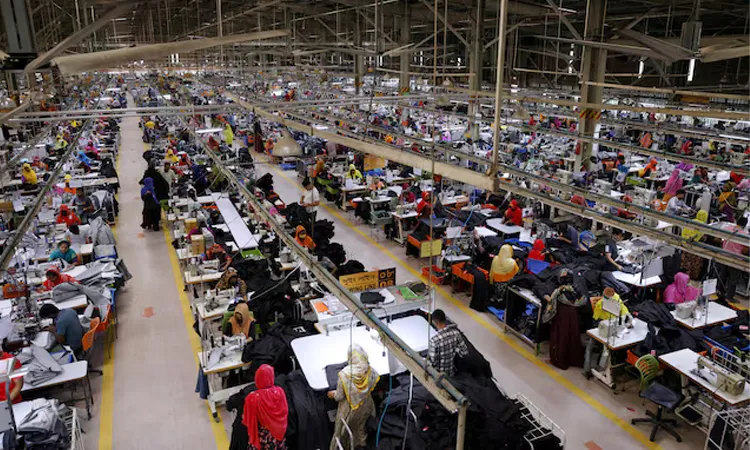
The potential policy change could affect Bangladesh’s $28 billion knitwear export sector and disrupt the long-standing balance between domestic yarn producers and garment manufacturers.