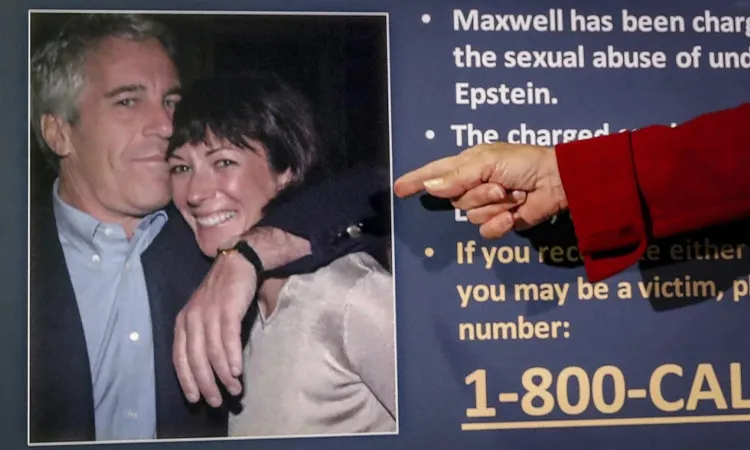
The U.S. Department of Justice (DOJ) is facing intense criticism from victims and legal experts following the botched release of investigative files related to Jeffrey Epstein.
While the disclosure was intended to provide transparency under a new federal law, a massive failure in the redaction process has inadvertently exposed the very people the law was designed to protect.

According to investigations by the Associated Press and other major outlets, the mountain of documents released by the DOJ contains significant "sloppy and inconsistent" redactions.

Exposed Victims: The names and faces of several sexual abuse victims—including some who had never publicly identified themselves—were left visible in police reports and investigative charts.
Uncensored Imagery: Despite promises to obscure nudity, the files contained uncensored photos, including selfies of nude and topless females.

Sensitive Data: Personal details such as Social Security numbers, bank account information, dates of birth, and private phone numbers were released in full view.
Inconsistent Redactions: In a strange contrast to the sensitive leaks, the DOJ over-redacted harmless information, such as the name "Joseph" from a Nativity scene caption and the name of a pet dog in an email.
Victims have expressed outrage over what they describe as a "permanent and irreparable" harm. Annie Farmer, a known survivor of Epstein’s abuse, voiced her anger to NBC News, stating that the "beyond careless" handling of her private data has endangered lives. Attorney Brittany Henderson, representing several victims, emphasized that this was not a mere technical glitch but a fundamental failure of the government to safeguard human beings.
The DOJ has blamed the errors on a combination of "technical and human error" exacerbated by a severely compressed timeline. Under the law signed by President Donald Trump on November 19, the department was given only 30 days to review millions of pages. Hundreds of lawyers were pulled from criminal cases to meet the deadline, leading to a rushed process that ultimately missed the initial cut-off date before the problematic release occurred.
The DOJ has taken down many of the problematic materials and is currently working to republish properly redacted versions.
While a recent court hearing in New York was canceled after reports of "progress" in fixing the files, victims' lawyers are still weighing legal avenues for recourse against the government.
Survivors are demanding the appointment of an independent monitor to oversee the database to ensure no further sensitive information is leaked.