Finance Minister Amir Khosru Mahmud Chowdhury on Saturday warned that Bangladesh is navigating "very difficult times," revealing that the escalating conflict in West Asia has driven up the country’s fuel oil and gas import costs by roughly Tk 400 billion.
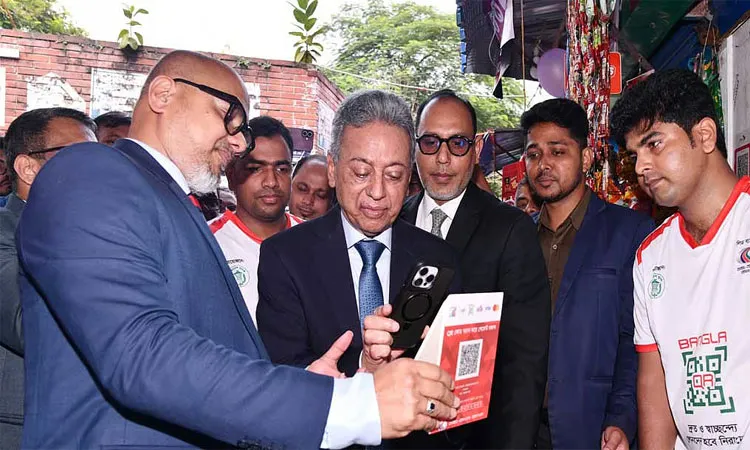
Speaking at an event at the Chattogram Maa O Shishu General Hospital in Agrabad, the minister highlighted disruptions in the vital Strait of Hormuz shipping lane. He noted that supply chain bottlenecks forced the government to hike domestic fuel prices despite extensive efforts to keep the market stable.
“You think I am sitting on a treasury as finance minister, ready to write cheques and money will appear. It is not that simple,” Khosru said, explaining that the national budget had already absorbed the Tk 400 billion surge in energy costs.
Taking aim at the ousted Awami League administration, the minister stated that the current BNP-led government inherited a deeply strained economy. “Everything we inherited from the previous government was minus, minus, and minus. There is nothing positive; everything is negative debt. We now have to make that up,” he asserted.
Khosru added that the current administration is also tasked with clearing around Tk 500 billion in outstanding unpaid bills left behind in the power and energy sectors. "We are in a deeply negative financial position. First we must recover from this, then the economy will move forward. I have already said it will take two years for the economy to stand back on its feet,” he noted.
Regional geopolitical tensions spiked earlier this year following a February 28 joint military strike by Israel and the United States on Iran, which sparked retaliatory attacks across Gulf nations hosting US bases.
Turning to domestic healthcare, the Finance Minister announced a major government initiative to expand primary healthcare services and significantly raise budget allocations for the sector. Emphasizing that universal preventive and primary healthcare is a fundamental right, he remarked that a large segment of the population has long been deprived of it.
Due to capacity constraints at state-run facilities, Khosru revealed plans to partner with private hospitals to treat low-income patients, with the medical costs covered by the state.
However, he cautioned that increased funding would be meaningless without strict accountability and implementation. “Earlier allocations in health mostly went to corruption, and people did not receive services. This time, we must ensure proper use through strict coordination,” the minister concluded.