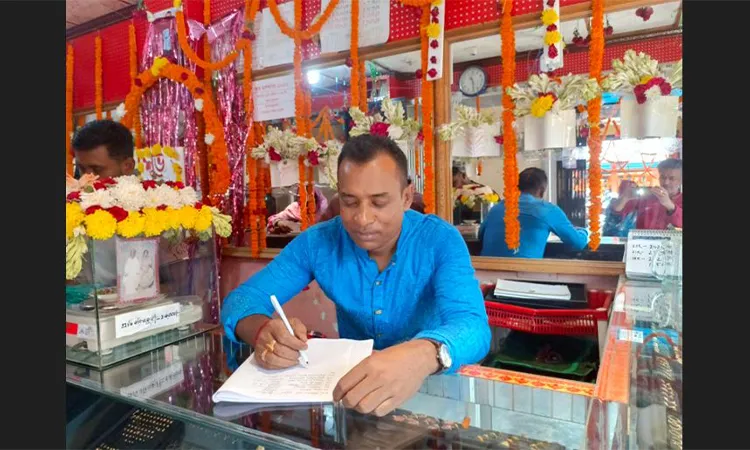
The 'Halkhata' remains a timeless symbol of Pohela Boishakh. Historically a cornerstone of Bengali New Year celebrations, this tradition involves closing old ledgers and opening new ones bound in iconic red cloth (Salu). More than a financial ritual, the Halkhata festival fosters a unique warmth between traders and customers, serving as a vital socio-economic folk festival.
The term ‘Halkhata’ originates from Persian, where ‘Hal’ means new and ‘Khata’ means ledger. This "new account" signifies a fresh start, settling debts from the previous year to begin the next with a clean slate.
The roots of this custom trace back to the Mughal era. In 1584, Emperor Akbar introduced the Bengali calendar to streamline tax collection. This led to ‘Punyaah,’ a ceremony where tenants paid arrears to landlords and were treated to sweets. Over centuries, while the Zamindari system vanished, the commercial Halkhata evolved into its own enduring cultural form.
In the past, shopkeepers distributed printed invitations, decorated storefronts with flowers, and offered guests sweets, paan, or sherbet. While Muslim traders often begin their ledgers with prayers and Hindu traders invoke blessings through Ganesh and Lakshmi Puja, the goal remains universal: wishing for prosperity and well-being.
Despite the digital revolution—where mobile apps and services like bKash or Nagad have replaced paper—the spirit of Halkhata persists. While it has become a mere formality in some regions, it remains a vibrant, glorious tradition in Lohagara Bazar.
Located on the banks of the Nabaganga River, Lohagara Bazar’s "Halkhata Utsav" is a testament to communal harmony. Traders here still hand-deliver invitations to customers. On the second day of the New Year, the market transforms into a hub of trust and sincerity.
This Tuesday (April 15), hundreds gathered at Lohagara Bazar. The "Gold Belt" (jewelry quarter) was particularly festive, with shops adorned in colorful decorations and a significant turnout of both men and women.
Nirmal Poddar Kalu, owner of Apan Jewelers, noted, "Halkhata is the soul of Bengali tradition. In Lohagara, we keep this custom alive as a matter of pride." Bikash Karmakar of Janani Jewellers added, "We have celebrated this for generations; it creates a bond of harmony that transcends business."
Halkhata is more than a business practice; it is a cultural anchor. It represents the reconstruction of relationships through trust and sincerity. Even as modernity reshapes the medium, the core spirit—saying goodbye to the old and welcoming the new—remains unchanged.