


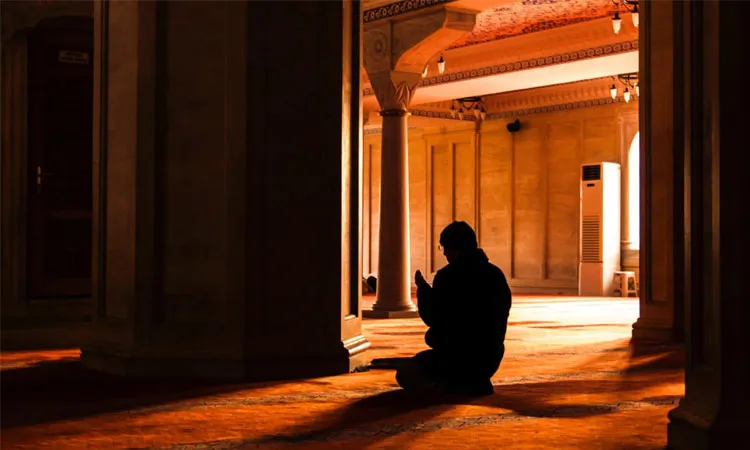
The main purpose of I’tikaf is to withdraw from worldly distractions and focus on worship to seek closeness to Allah and His Messenger, Prophet Muhammad (peace and blessings be upon him).
During I’tikaf, a believer stays in the mosque and spends time in prayer, recitation of the Qur’an, remembrance of Allah, and other acts of devotion. Worshippers are encouraged to devote as much time as possible to worship, especially during the last ten days of Ramadan.
Performing voluntary I’tikaf
Although I’tikaf is especially observed in the final ten days of Ramadan, voluntary I’tikaf can be performed in a mosque at any time of the year.
A person may also receive the reward of I’tikaf by entering a mosque with the intention of performing it, even for a short time. The intention may be made silently in one’s own language.
Importance of staying focused on worship
Islamic teachings emphasise that a person observing I’tikaf should avoid unnecessary worldly discussions and remain focused on worship and reflection.
The mosque is primarily a place of worship. For those performing I’tikaf, eating, drinking and sleeping inside the mosque are permitted, but they should ensure that their activities do not disturb other worshippers. Maintaining cleanliness and respect for the mosque is also important.
Observing I’tikaf at the local mosque
Scholars advise Muslims to perform I’tikaf in their local mosque, as it strengthens community ties and makes the practice easier to maintain.
Travelling to distant or larger mosques only for the hope of greater reward is discouraged unless there is a clear religious purpose, such as learning the Qur’an or receiving Islamic education.
I’tikaf for women
Women who wish to observe I’tikaf may designate a specific place for worship inside their homes. Islamic traditions mention that the wives of the Prophet observed I’tikaf in this manner during Ramadan.
For many women who cannot spend extended time in mosques due to family responsibilities, observing I’tikaf at home provides an opportunity to dedicate themselves to prayer and remembrance during the final days of Ramadan.
Muslims believe that sincere devotion during this period helps strengthen faith and brings spiritual closeness to Allah.
Author: Mohammed Nurul Absar Taiyobi is a writer, researcher, and Islamic thinker. He is the Founder President of the Expatriate Journalists Association (PRASAS) based in Dubai, UAE. Additionally, he serves as the Chairman of the Islamic Research Center located in Abu Dhabi, UAE. For correspondence, he can be reached at: muntyping@gmail.com
