


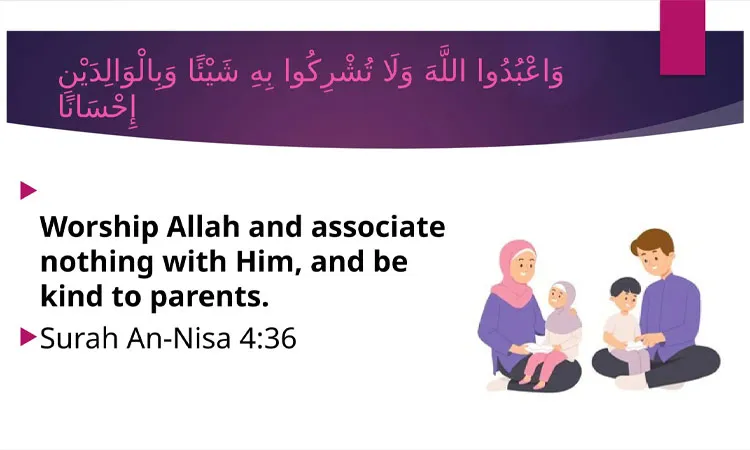
The final ten days of Ramadan are widely regarded as a time for seeking salvation. For believers, this is a moment to reflect deeply on deeds that lead to Allah’s mercy and Paradise. Among these deeds, serving one’s parents holds a unique and elevated place in Islam.
It is narrated that the beloved Prophet Muhammad (peace be upon him) once said “Ameen” three times while ascending the pulpit. When the Companions later asked why, he explained that Angel Jibreel had made three supplications. One of them was for the destruction of a person who finds his parents, or even one of them, in old age but fails to earn Paradise by serving them. The Prophet responded “Ameen” to this prayer. (Mishkat Shareef)
In another authentic hadith, narrated by Hazrat Abu Hurairah (RA), the Prophet (peace be upon him) said that a person is truly humiliated and ruined if his parents reach old age and he still fails to attain Paradise by serving them. (Sahih Muslim)
These teachings clearly show the spiritual value of caring for parents. What greater success can there be than an act that opens the door to Paradise?
Yet, the reality around us is painful. Neglect of elderly parents, emotional abuse, abandonment, and even violence by children are increasingly reported in society. Such acts are not only morally shameful but also grave sins in Islam.
Allah Almighty has placed kindness to parents immediately after His worship. In the Holy Quran, Allah says: “Your Lord has decreed that you worship none but Him, and that you be kind to your parents. If one or both of them reach old age, do not say to them ‘uff’, nor speak harshly to them, but speak to them with kindness and humility.” (Surah Al-Isra: 23–24)
This verse sets a clear standard: respect, patience, and mercy towards parents are not optional—they are obligations. Gratitude to Allah, scholars explain, is incomplete without gratitude to one’s parents.
After Allah and His Messenger, no one deserves more respect, care, and gratitude than parents. Serving them is a duty, whether by providing food, clothing, shelter, medical care, or emotional support. Children are required to speak gently, respond promptly, pray for their parents, and prioritise them over personal comfort—except in matters that involve disobedience to Allah.
Islam also teaches that kindness to parents does not end with their death. Praying for them, giving charity on their behalf, reciting the Quran, and maintaining good relations with their friends are all means of ongoing reward.
A well-known saying reminds us: “As you treat others, so will you be treated.” The way we behave with our parents often reflects in how our children will treat us.
Before ignoring or mistreating parents, one should reflect on the sacrifices they made—from the hardships of pregnancy to years of care, struggle, and love. If anyone has fallen short, Islam encourages immediate repentance and sincere apology.
Let every believer repeat the prayer taught in the Quran: “My Lord, have mercy on them as they raised me when I was small.”
May Allah grant us the ability to serve our parents with sincerity, earn His pleasure, and attain salvation and Paradise. Ameen.
