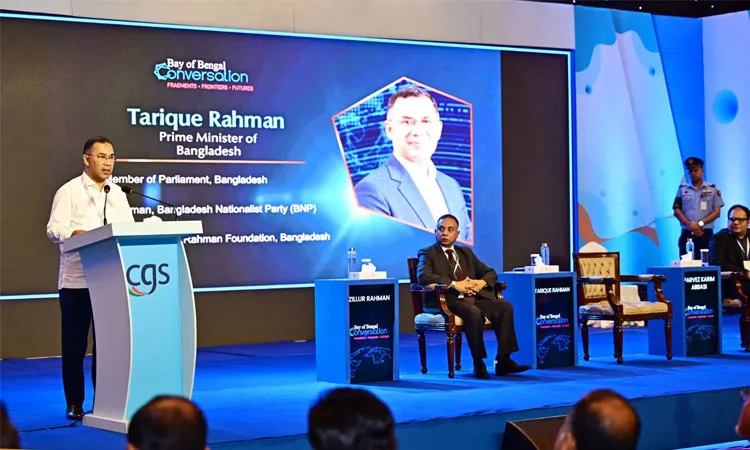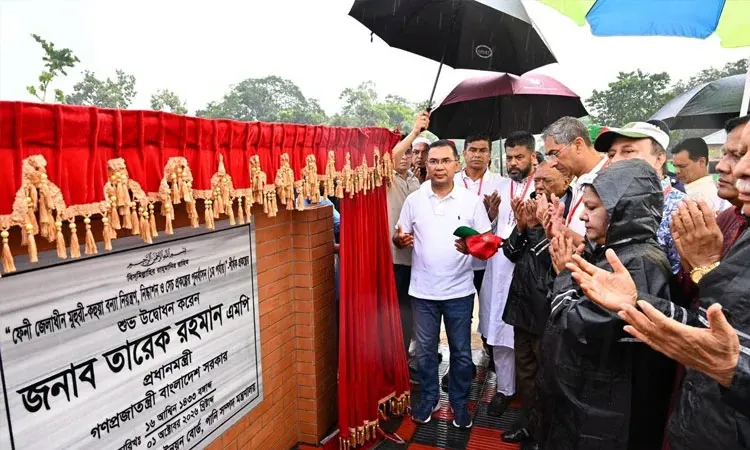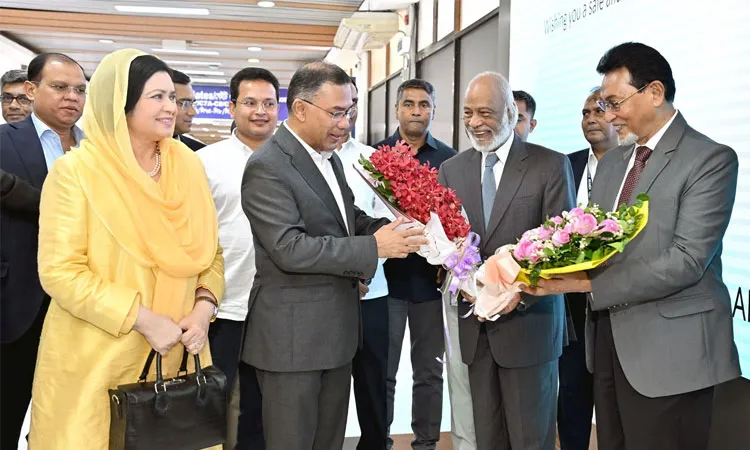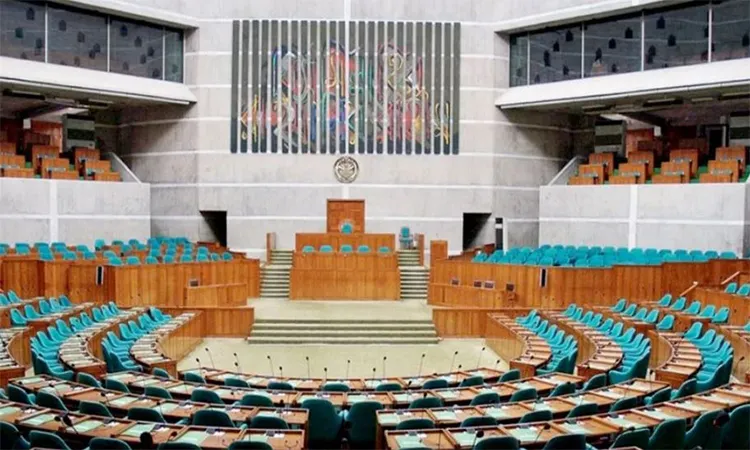
After achieving an absolute majority in the 13th National Parliament election, the Bangladesh Nationalist Party (BNP) is moving towards forming a government again after almost 20 years. Almost all of the party's senior leaders have won the election. The fact that party chairman Tarique Rahman will take charge as the Prime Minister has already been confirmed.
Along with the formation of a new government, the most discussed issue in political circles is who will sit as the president and what the draft of the cabinet will look like. Party sources say that plans are underway to form a balanced cabinet with a combination of experienced and young leadership. At the same time, a few political and non-political figures outside the BNP are also being considered for the post of president.
In this context, the idea of a shadow cabinet has come into discussion. Jamaat leader and renowned Supreme Court lawyer Shishir Monir and Jatiya Nagorik Party spokesperson Asif Mahmud Sajib Bhuiyan recently announced the formation of a shadow cabinet on social media.
Last Saturday night, Shishir Monir wrote on his verified Facebook page, ‘We will form a shadow cabinet, InshaAllah.’ Then on Sunday (February 15) morning, Asif Mahmud Sajeeb Bhuiyan announced, ‘The shadow cabinet will ensure transparency and accountability, and will act as a watchdog in the government’s activities.’
It is known that the shadow cabinet is a familiar structure of the Westminster style parliamentary system, which is mainly formed by the opposition party to monitor and criticize the government. Usually, a shadow minister is nominated for each ministry of the government. Their job is to analyze the government’s policies and budget, criticize it, and present alternative policies if necessary.
This process is used regularly in the UK and Australia. In addition to monitoring the government’s policies, raising questions in parliament, and ensuring accountability, the shadow cabinet also serves as a means of political training for the opposition party.
Analysts believe that it is helpful for opposition party leaders and activists to gain practical knowledge about the administrative structure, policy formulation, and budget management. At the same time, it is a tool to show the opposition party an image of an effective and prepared party to the public.
There is no precedent for the formal formation of a shadow cabinet in Bangladesh. Although there is no constitutional obligation, experts believe that it can be helpful in ensuring accountability in the country's democratic process. This structure can play an important role in monitoring the policies and activities of the ruling parties in the future in the political arena.
However, due to the lack of legal obligations, questions have been raised about the effectiveness of the shadow cabinet. Experts say that it works in Britain because there is a strong parliamentary practice, regular question-and-answer sessions, and a political culture. A shadow cabinet is not just a name. Without research, policy documents, alternative budgets, and continuous parliamentary battles for each ministry, it is likely to remain a paper announcement.