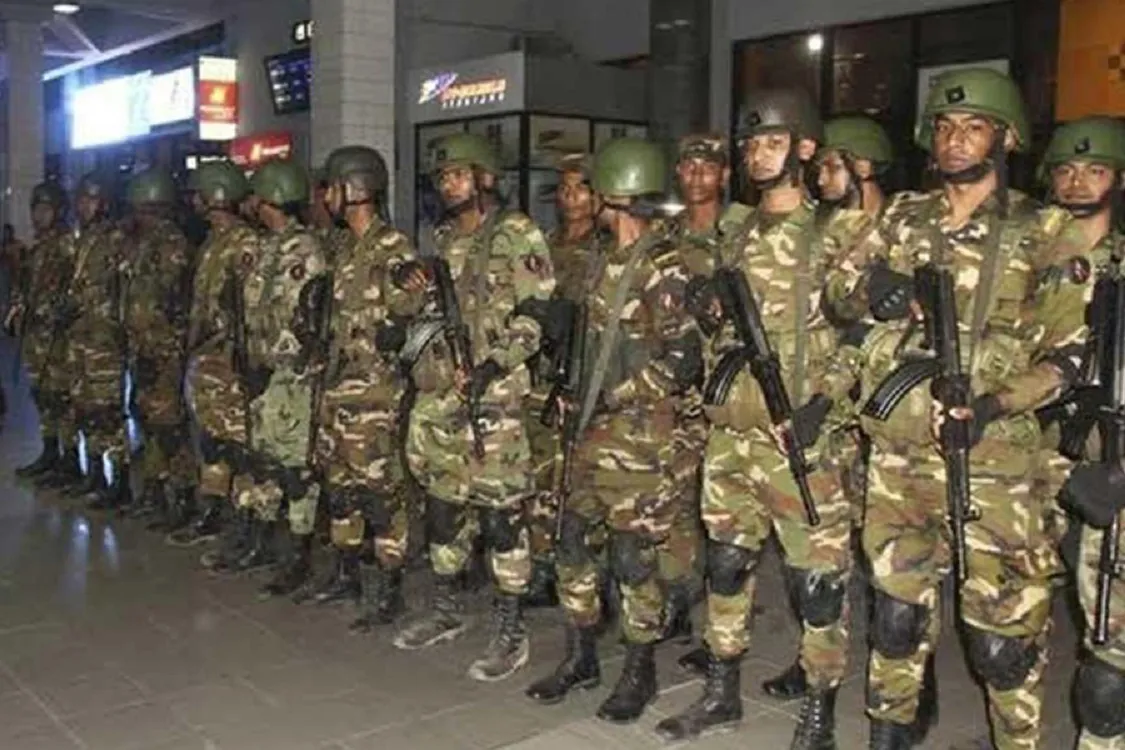
The Election Commission (EC) has directed law enforcement agencies to take proactive measures to ensure law and order in the lead-up to the 13th parliamentary elections.
The instructions encompass the recovery of illegal firearms, the arrest of identified and listed criminals, the establishment of check-posts, and the execution of searches following the announcement of the election schedule, as well as the deposit of legal weapons and the sealing of borders and sea routes if necessary.
These actions were determined during a pre-preparatory meeting focused on law and order held on October 20, prior to the elections.
Chief Election Commissioner AMM Nasir Uddin presided over the meeting, which included four election commissioners, the EC secretary, the home secretary, heads and representatives from various security agencies, and department leaders. In accordance with protocol, the minutes of the meeting were subsequently distributed to relevant parties.
During the discussions, it was noted that there may be attempts at sabotage during the election period. The EC also raised concerns regarding potential sabotage involving expatriate votes cast via postal ballots. Authorities were urged to prepare in advance to mitigate such risks.
The commission cautioned that there could be attacks on political parties, efforts to seize polling centers, ballot snatching, interference with voting, or hindering polling officials from carrying out their responsibilities. Additionally, there is a threat of attacks or arson targeting homes during the election period. To ensure a swift response to emergencies, Army aviation and commando units will remain on standby alongside other law enforcement agencies, as decided in the meeting. The importance of coordination among all forces was highlighted for the safety of polling officials, voters, and others engaged in election duties.
An election commissioner present at the meeting stated that the current commission would refrain from issuing secret instructions. "All directives will be communicated publicly in accordance with the laws and regulations," he remarked.
The meeting reaffirmed that voter turnout tends to rise when the election atmosphere is peaceful and credible. The commission expressed its commitment to conducting a "fair, beautiful, and impartial" election.
The EC acknowledged concerns regarding potential "unusual situations" related to the polls, including attacks on opponents, attempts by losing candidates to incite chaos, efforts to manipulate polling irregularities, or challenges to the election's integrity.
It was agreed that those nearest to any such incidents must act promptly. Neutrality and a strong position must be upheld in all matters. Coordination at all levels will be crucial for maintaining law and order. Discussions will establish who will lead the forces in the field.
The commission directed agencies to counteract rumors and propaganda on social media and to prepare in advance to mitigate issues related to electronic voting machines. Steps will be taken to prevent false propaganda or character defamation through cloned voices. Security must also be guaranteed for the offices of returning officers and for reserved postal ballots.
Changes may occur in key positions prior to the election, and the forces were instructed to stay ready for any potential risks. "A deployment strategy should be formulated following a threat assessment," CEC Nasir stated. "The strategy should categorize areas into red, yellow, and green zones. Trust among the populace must be restored through free, fair, and peaceful elections, and for this, collective effort is essential."
Comment