- National
- Bangladesh
- Business
- International
- Sports
- Entertainment
- Politics
- Technology
- Life Style
- Religion
- Opinion
- FIFA World Cup 2026
Wednesday, 05 August 2026

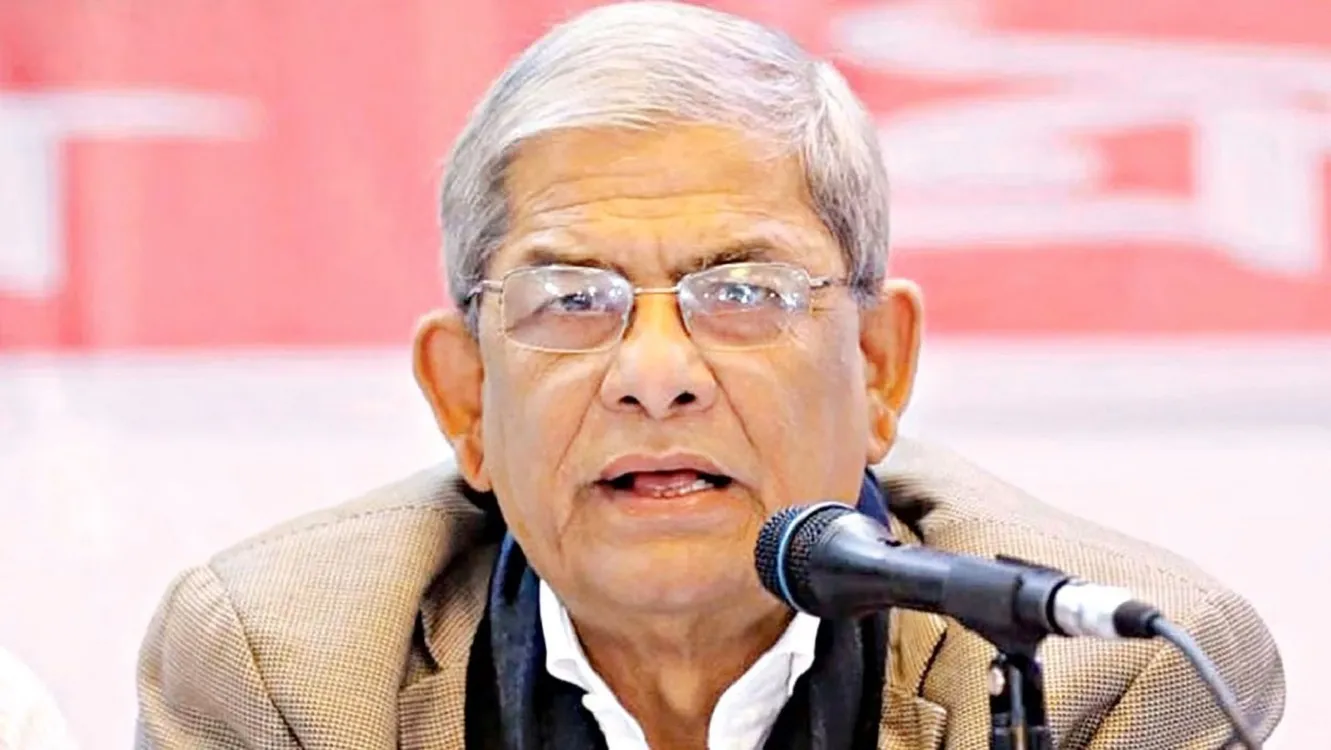
BNP Secretary General Mirza Fakhrul Islam Alamgir expressed deep concern today regarding the current state of instability in Bangladesh. Speaking at the publication ceremony for the late BNP leader Barrister Moudud Ahmed's book, "Demise of Democracy," in Dhaka, Alamgir lamented the absence of figures like Ahmed.
"At this moment, we truly needed people like Barrister Moudud Ahmed. Because, we are living in a state of instability. Barrister Moudud was undoubtedly one of the people who could have shown us the way out," Fakhrul said.
The BNP leader also voiced regret that Moudud Ahmed was unable to witness what he had sincerely wished for: the "fall of fascist Hasina."
Fakhrul recalled a period of shared imprisonment with Moudud Ahmed in 2012, highlighting the late leader's profound commitment to writing. He shared that upon arriving at the old central jail, Moudud immediately sought out a specific room, intent on dedicating his time in prison entirely to his literary work. Fakhrul noted that Moudud was an objective writer of history, suggesting that while the politician might attract controversy, his work in documenting history was less open to criticism.
To illustrate Moudud Ahmed's democratic principles, the BNP secretary general recounted a powerful anecdote from the country's early post-independence days. During the Sheikh Mujibur Rahman government, when the Rakkhi Bahini and a "misrule" one-party system were being established, Moudud, then a young lawyer, filed a Habeas Corpus petition.1 He successfully secured the release of the communist leader Shanti Sen and his companions—who had been subjected to extreme torture for 21 days—by having them presented in court before Justice Debesh Bhattacharya.
Fakhrul concluded by stressing that Moudud Ahmed was a "thoroughly democratic political leader." He suggested that even when Moudud took different political positions at various times, it was generally motivated by a desire to find a way back to democracy, calling this the "best way to evaluate him."