


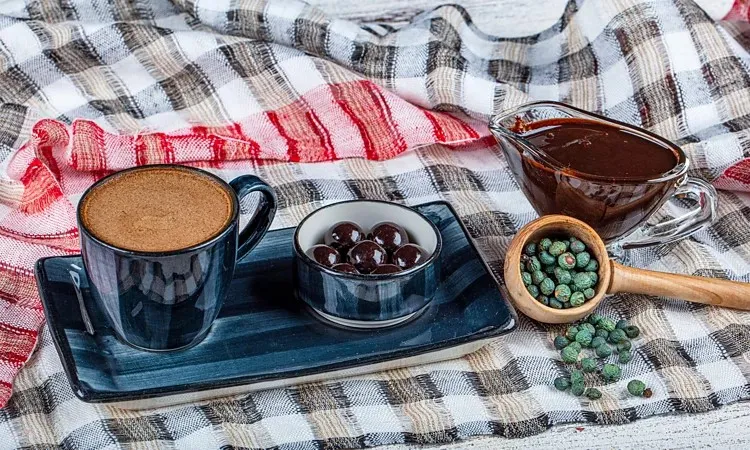
For centuries, the city of Gaziantep in southeast Turkey has held a secret that is now capturing the world's attention: Menengiç Kahvesi.While it looks and is brewed like traditional Turkish coffee, this ancient drink contains no caffeine and isn't made from coffee beans at all. Instead, it is crafted from the roasted, ground fruit of the terebinth tree, a species of wild pistachio native to the Fertile Crescent.
A Cultural Landmark and Home Remedy In Gaziantep, Menengiç is more than a beverage; it is a cultural pillar and a time-honored medicinal tonic. Locals, such as gastronomy expert Filiz Hösükoğlu and veteran producer Mustafa Zor, recall the drink being served by grandmothers as a primary remedy for coughs, colds, and winter ailments. Served decadently with milk, the drink offers a nutty, fatty, and slightly bitter flavor profile, often topped with a thick, espresso-like foam.

Deep Historical and Neolithic Roots The history of Menengiç stretches back millennia. Archaeobotanical evidence from Göbekli Tepe the world’s oldest temple site (nearly 12,000 years old), shows that Neolithic hunter-gatherers were already harvesting and grinding wild pistachios. This tradition survived through the Ottoman era, with legends suggesting that Sultan Mehmet IV enjoyed the brew at the historic Tahmis Kahvesi (founded in 1635) during his 17th-century military campaigns.

EU Recognition and Global Appeal The most significant recent development for the "wild pistachio coffee" occurred in 2024, when Menengiç coffee officially received European Union (EU) Geographical Indication (GI) status.
This status ensures that only products meeting specific traditional standards from the region can be marketed under the name, protecting Gaziantep’s culinary intellectual property.
Modern research is beginning to validate ancient claims, with preliminary studies highlighting the drink’s high protein, mineral, and antioxidant content.
While traditional uses in breads and oils have faded, the beverage itself is seeing a massive revival. It has moved from historic wood-stove cafes to modern "hipster" shops and luxury boutique hotels across Turkey and Iraqi Kurdistan (where it is known as qazwan).

