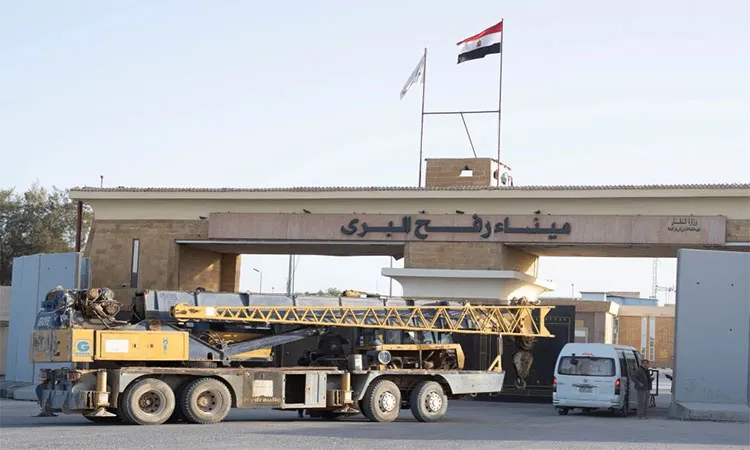
Israel reopened the Rafah border crossing between Gaza and Egypt on Monday for a limited number of pedestrians. The move allows a small number of Palestinians to leave the enclave and enables some who fled earlier in the war to return for the first time in months.
The crossing is located in the Philadelphi corridor, an area seized and largely demolished by Israeli forces in May 2024. As the primary gateway for Gaza’s 2 million residents, its reopening is a key requirement of the "Phase One" ceasefire brokered by U.S. President Donald Trump in October.
Tight Security and Limited Numbers Palestinian sources indicate that only 50 people were expected to enter Gaza on Monday, with a similar number permitted to leave. All travelers are subject to rigorous Israeli security checks. Those entering are likely among the 100,000 Palestinians who escaped to Egypt during the first nine months of the conflict.
The crossing process is grueling. Travelers must walk 2.5 kilometers (1.5 miles) through the Israeli-controlled border zone and pass through three separate gates. While one gate is nominally administered by the Palestinian Authority and monitored by a European Union task force, Israel maintains remote control over the process.
A Tenuous Ceasefire Despite the diplomatic progress, violence persists. Israeli strikes killed at least four Palestinians on Monday, including a three-year-old boy. The military also launched heavy airstrikes on Saturday, killing 30 people in response to what it called a Hamas truce violation.

The reopening is part of a broader U.S. plan. In January, the Trump administration announced "Phase Two," which seeks to negotiate Gaza's future governance and reconstruction. However, the plan faces steep hurdles: Disarmament: Hamas has not agreed to surrender its weapons. Territory: Israel still occupies over 53% of Gaza’s land. Media Access: Israel continues to bar foreign journalists from Gaza, citing safety risks. The Foreign Press Association is currently challenging this ban in Israel’s Supreme Court.
Since the October ceasefire, health officials report that Israeli attacks have killed over 500 Palestinians, while militants have killed four Israeli soldiers. The total death toll since the war began in 2023 stands at 1,200 in Israel and more than 70,000 in Gaza.