


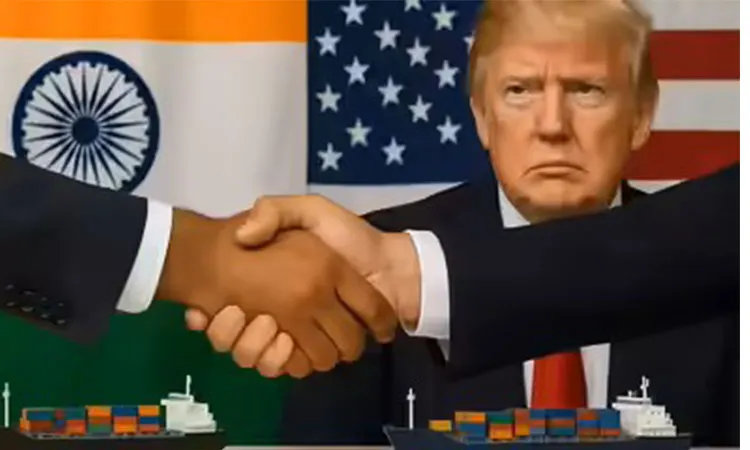
President Donald Trump has "greenlit" a sweeping bipartisan sanctions bill that could impose tariffs of up to 500% on major trade partners, including India, China, and Brazil, if they continue to purchase Russian energy.
The move, announced Wednesday by Senator Lindsey Graham (R-SC) following a meeting with the president, marks a sharp escalation in the administration's efforts to force an end to the war in Ukraine by choking off Moscow's revenue.
"He greenlit the bipartisan Russia sanctions bill," Graham told reporters. "I look forward to a strong bipartisan vote, hopefully as early as next week."
The proposed "Sanctioning Russia Act of 2025" empowers the president to punish individuals and nations acting on Russia’s behalf or obstructing peace efforts.4 The legislation triggers severe penalties under four specific conditions: 1. Refusing to negotiate a peace agreement with Ukraine. 2. Violating an existing peace agreement. 3. Launching a new invasion of Ukraine. 4. Attempting to subvert the Ukrainian government.
If any of these conditions are met, the bill mandates the president to impose penalties ranging from visa restrictions to a minimum 500% tariff on all goods and services from countries knowingly trading in Russian-origin uranium or petroleum.
The bill adds fresh pressure to New Delhi, which has already seen its exports to the U.S. hit by significant levies. In 2025, the Trump administration imposed two separate 25% tariffs on Indian goods—one as a "reciprocal" trade measure and another as a penalty for Russian oil purchases—bringing the current total to 50%.
Speaking aboard Air Force One earlier this week, Trump noted that while he maintains a cordial relationship with Prime Minister Narendra Modi, he remains dissatisfied with India’s energy ties to Moscow.
"Modi is a good guy. He knew I was not happy," Trump said. "We can raise tariffs very quickly."
Beyond tariffs, the bill directs the U.S. Treasury to freeze assets of targeted entities and instructs the Commerce Department to ban the transfer of U.S.-produced energy technology to Russia.
Analysts warn that 500% tariffs would effectively function as a trade embargo, potentially disrupting global supply chains and significantly straining U.S. relations with BRICS nations.

