


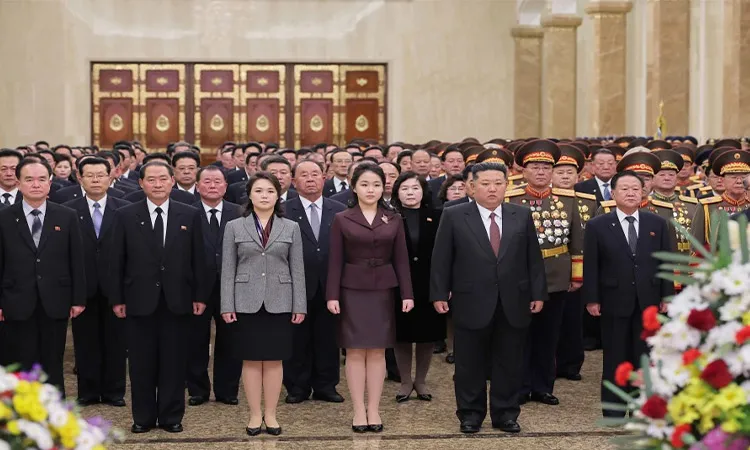
North Korean leader Kim Jong Un’s teenage daughter, Kim Ju Ae, made her first known visit to the family’s sacred mausoleum on New Year’s Day. Experts say the move significantly bolsters her standing as her father’s potential successor.
State media images released Friday show the girl—believed to be about 13 years old—standing in the front row with her parents. The family was seen bowing at Pyongyang’s Kumsusan Palace of the Sun, the site where the embalmed bodies of her grandfather, Kim Jong Il, and great-grandfather, Kim Il Sung, are displayed.
The palace serves as the ultimate symbol of the Kim family’s "divine" legitimacy. Cheong Seong-Chang, a specialist at South Korea’s Sejong Institute, described the visit as a "politically orchestrated move" ahead of a critical Workers’ Party congress.
Some analysts speculate that Kim Ju Ae could be named a high-level official during the upcoming congress, which is expected to take place in January or February. While some suggest she could be appointed to the "first secretary" position—the party's No. 2 spot—others argue her age makes a lower-level appointment more likely.
Since her public debut in late 2022, Kim Ju Ae has become a fixture at major state events, including missile launches and military parades. Her prominence is a departure from North Korean tradition; neither Kim Jong Un nor his father were introduced to the public until they reached adulthood.
September 2025: She accompanied her father on an official trip to Beijing. New Year's Day 2026: She was seen kissing her father on the cheek during celebrations, a public display of affection designed to show their close bond.
While South Korea’s National Intelligence Service (NIS) has identified her as the "likely heir," the international community remains divided. Some skeptics point to the deeply patriarchal nature of North Korea’s leadership and Kim Jong Un’s relatively young age (41) as reasons to doubt a female succession. However, her increasing visibility suggests Kim is determined to secure the family’s fourth-generation rule early.

