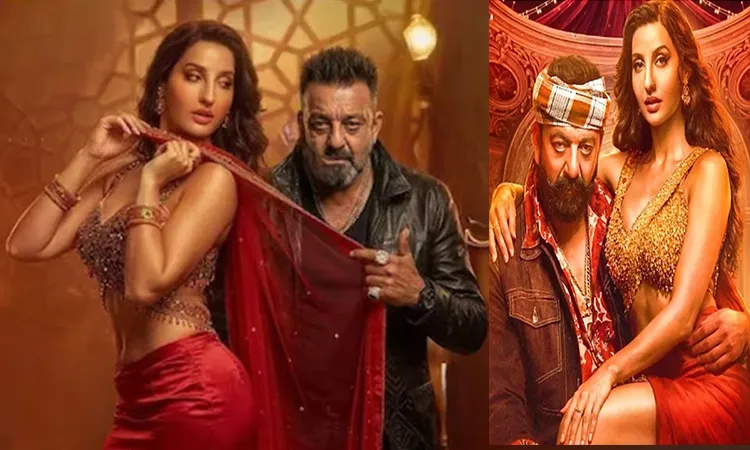
Bollywood actress Nora Fatehi is facing growing controversy over the song ‘Sarke Chunar Teri Sarke’ from the film KD: The Devil, which has now been officially banned in India.
The issue began after the Hindi version of the song was released and widely criticised on social media for its alleged double-meaning lyrics and sexually suggestive content. Critics argued that the song disrespects women and promotes obscenity.

The controversy escalated when a group of 10 lawyers filed a complaint with India’s Ministry of Home Affairs, demanding cancellation of Nora Fatehi’s work permit and her deportation. The complaint was also forwarded to multiple authorities, including the Ministry of Information and Broadcasting, Central Board of Film Certification, Ministry of Electronics and Information Technology, and the National Commission for Women.

The petition alleges that the song violates several laws, including the Foreigners Act, 1946, the Indecent Representation of Women (Prohibition) Act, 1986, and provisions under the Information Technology Act, 2000. The lawyers claim the content is obscene, harms public morality, and negatively influences younger audiences.
Responding to the backlash, Nora Fatehi clarified that she had shot the song three years ago in Kannada and was unaware of the meaning of the lyrics at the time. She stated that the Hindi version was released without her consent, and she had raised objections after seeing it.

“I am not a star child; my hard work and respect are my only capital,” she said, adding that she had distanced herself from the project and did not promote the song.
Nora also criticised the use of AI-generated visuals and “unflattering images” in the lyrical video, saying she was uncomfortable when she first saw the final output. She warned the filmmakers about potential backlash before the Hindi version was released.
Despite her clarification, the petitioners rejected her defense, arguing that artists must take responsibility for the projects they are associated with.
The controversy intensified further after a religious body in Aligarh reportedly issued a fatwa against the actress, calling the content objectionable.
Amid mounting pressure, India’s Information and Broadcasting Minister Ashwini Vaishnaw confirmed in Parliament that the song has been officially banned.
The incident highlights ongoing debates in India over content regulation, artistic freedom, and public morality, especially in the digital era.