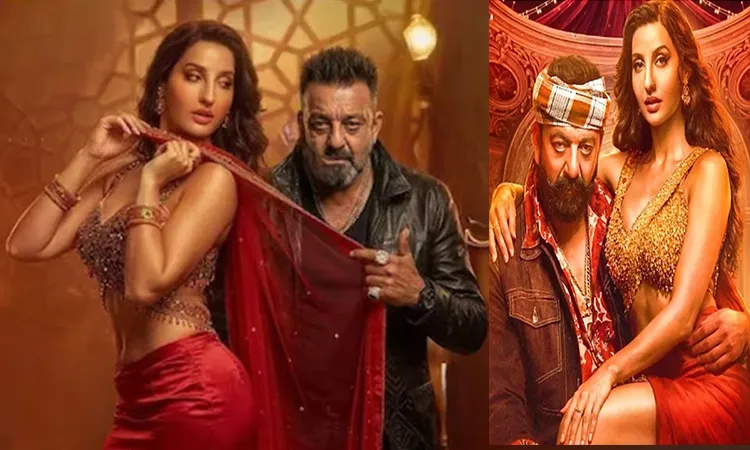
A major controversy has erupted over the song Sarke Chunar Teri Sarke from the upcoming Kannada film KD: The Devil, prompting action from India’s National Commission for Women (NCW).
The commission has summoned actors Nora Fatehi and Sanjay Dutt, along with lyricist Raqueeb Alam, producer Venkat K Narayana, and choreographer Kiran Kumar. They have been asked to appear before the NCW on March 24 with relevant documents.

The NCW said it took suo motu cognisance of complaints alleging that the song contains vulgar lyrics and sexually suggestive visuals. It noted that the content appears prima facie objectionable and may violate provisions under the Bharatiya Nyaya Sanhita, IT Act, and POCSO Act.
The controversy intensified after the Hindi lyrical video, released earlier this week across multiple languages, was removed from YouTube following widespread backlash from social media users, civil society groups, and politicians. Union Minister Ashwini Vaishnaw later confirmed that the track has been banned.

The song, featuring Nora Fatehi in a lead dance role, has been criticised for double entendre lyrics and provocative choreography. Critics say the visuals objectify women and cross acceptable limits of decency.
Responding to the backlash, Nora Fatehi clarified on Instagram that she had only worked on the original Kannada version and was unaware of the Hindi version’s lyrics. She said the Hindi adaptation was released without her knowledge and distanced herself from its content. She also indicated that she may take legal action against the makers.

However, her clarification triggered further debate online, with many users questioning her claims. Nora responded strongly to critics, defending her position and reiterating that she did not perform the Hindi version of the song.
She also addressed criticism of her dance style and attire, stating that such elements are common in the entertainment industry and not unique to her work. At the same time, she acknowledged concerns and said she would be more careful in future projects.
The incident has reignited debate over “item songs” in Indian cinema, particularly around the balance between artistic expression and societal standards.
With the NCW hearing scheduled, the controversy continues to draw attention, raising broader questions about accountability in film production and content regulation.