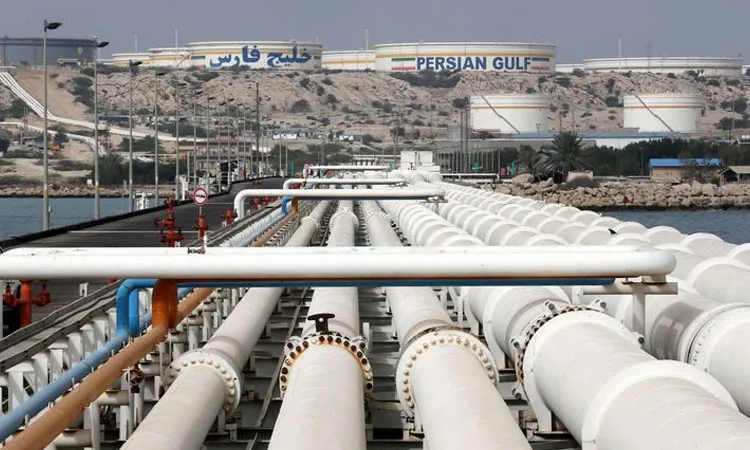
Global oil prices have fallen sharply and stock markets have surged following a conditional two-week ceasefire between the US and Iran. A central condition of the truce is the reopening of the Strait of Hormuz, a critical waterway for global energy supplies.
Market Reaction: Oil Drops, Stocks Rally
The price of benchmark Brent crude plunged roughly 13% to $94.80 a barrel, while US-traded oil fell more than 15% to $95.75. However, prices remain significantly higher than the pre-conflict level of around $70 a barrel.
The diplomatic breakthrough triggered a massive rally across global financial markets: Asia: Heavily reliant on Middle East energy, Asian markets posted huge gains. South Korea's Kospi jumped nearly 7%, and Japan's Nikkei surged 5.5%.
Europe: London's FTSE 100 rose over 2.5%, while markets in France and Germany gained between 4% and 5%.
US: Wall Street futures pointed to a highly positive open.
The Ceasefire Agreement
The truce was brokered after high-stakes rhetoric. In a social media post, US President Donald Trump agreed to suspend attacks on Iran for two weeks, provided Tehran allowed the "complete, immediate, and safe opening" of the Strait of Hormuz. Earlier, he had set a strict deadline, threatening devastating escalation if a deal was not reached.
Iranian Foreign Minister Abbas Araghchi confirmed Tehran's compliance, stating that safe passage through the strait would be permitted if all attacks against Iran were halted. Market analysts suggest Trump was motivated to avoid letting global energy prices skyrocket, which would inflict severe economic damage ahead of domestic political pressures.
Relief for Asia and the Global Economy
The reopening of the strait brings immediate relief to developing economies, particularly in Asia, which have been battered by the crisis. In late March, the Philippines—which imports 98% of its oil from the Middle East—was forced to declare a national energy emergency as petrol prices doubled.
"The ceasefire is good news for Asian countries," said Ichiro Kutani from Japan's Institute of Energy Economics. "If it holds, oil prices will return to normal states, though this will take time."
The economic relief extends globally. In the UK, wholesale gas prices dropped by 18%, causing traders to revise inflation forecasts. Financial markets now anticipate only one interest rate hike this year, down from the three expected at the height of the conflict.
Long Road to Recovery
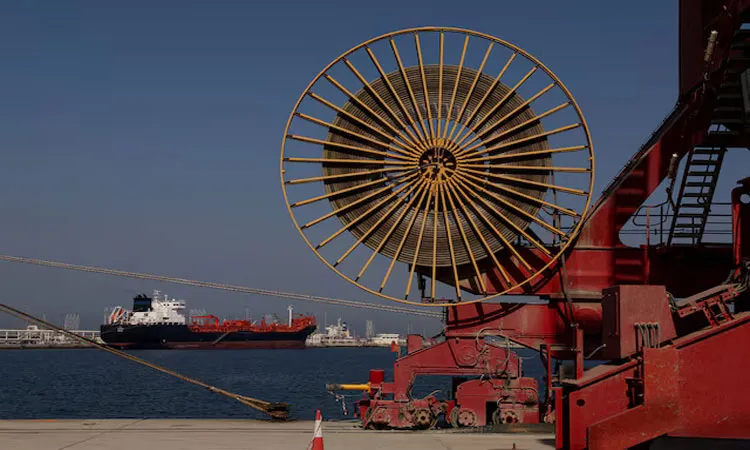
Despite the market optimism, experts warn that supply chain woes will not disappear overnight. Dozens of ships previously stranded near the strait are beginning to move, but resuming full energy production will be a slow process.
Recent retaliatory strikes severely damaged regional energy infrastructure, including Qatar's Ras Laffan hub, which produces a fifth of the world's liquefied natural gas. Research firm Rystad Energy estimates that repairing the region's industrial damage could take years and cost upwards of $25 billion.
Consequently, while the immediate panic has subsided, consumers and industries worldwide should still expect elevated costs for fuel and fertilizer in the coming weeks as refineries slowly power back up.