- National
- Bangladesh
- Business
- International
- Sports
- Entertainment
- Politics
- Technology
- Life Style
- Religion
- Opinion
Wednesday, 01 April 2026

Bangladesh Petrochemical Company Limited (BPCL) has introduced artificial intelligence (AI) and a Recycling Business Unit (RBU) model to improve plastic waste management in Bangladesh.
Under the World Bank-funded PLEAS Project, BPCL has set up seven RBUs in Feni, Cox's Bazar, Rupganj, Siddhirganj, Bogra, Chittagong, and Comilla. These units have recovered over 617 metric tons of plastic and created jobs for 5,615 people.
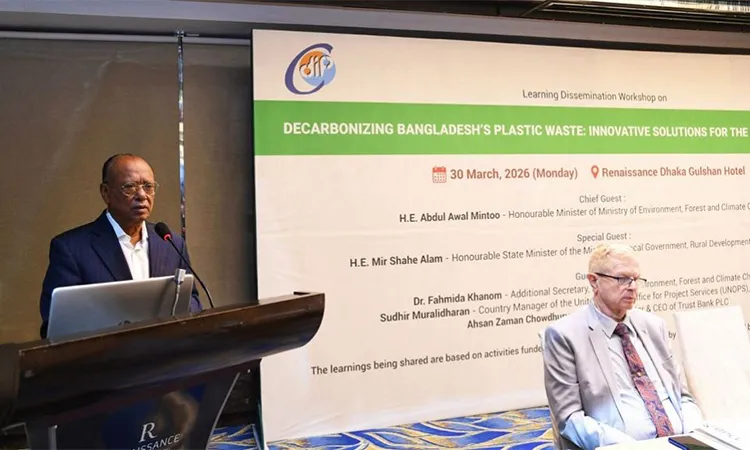
The progress was presented at a workshop titled “Decarbonizing Bangladesh's Plastic Waste: Innovative Solutions for the Circular Economy” held at Renaissance Dhaka Gulshan Hotel on March 30. BPCL Managing Director and CEO Khadem Mahmud Yusuf outlined project achievements, followed by a video presentation and discussion.
Environment Adviser Abdul Awal Mintu attended as chief guest. He said plastic cannot be addressed through bans alone, as it is essential to daily life. “We must turn waste into resources through innovation,” he added.
Additional Secretary Dr. Fahmida Khanam said the government will support such initiatives, including technical assistance for solid waste management.
Dr. Melita Mehzabin stressed the need for a structured financial model and praised efforts to ensure sustainable buyers.
Sudhir Muralidharan of United Nations Office for Project Services called the project a strong example of innovation and urged nationwide expansion.
Nyoka Martinez Backstrom said BPCL has built an effective supply chain from grassroots collectors.
Michael Claude highlighted the importance of government involvement and economic inclusion in waste management.
BPCL said income for scrap suppliers has increased from Tk 2 to Tk 3 per kilogram. Partner organization Cdeep has supported 1,404 informal waste collectors with healthcare, provided childcare to 70 children, and delivered life-skills training to 1,475 people.
Comment