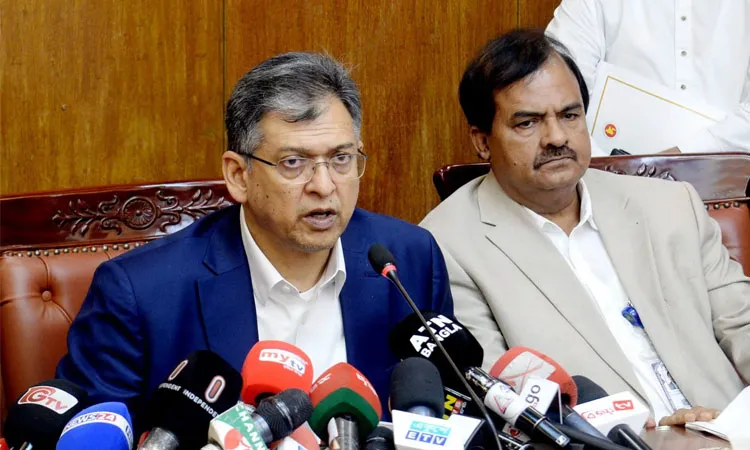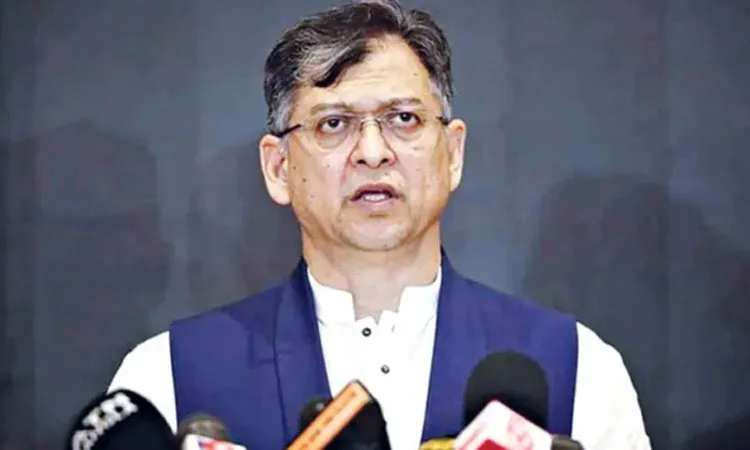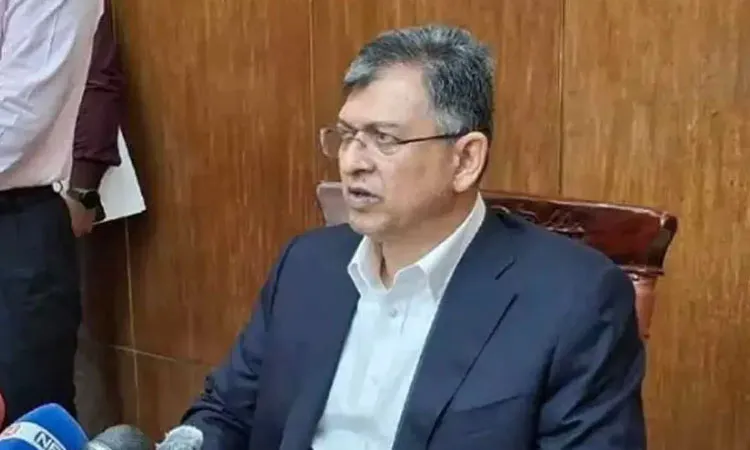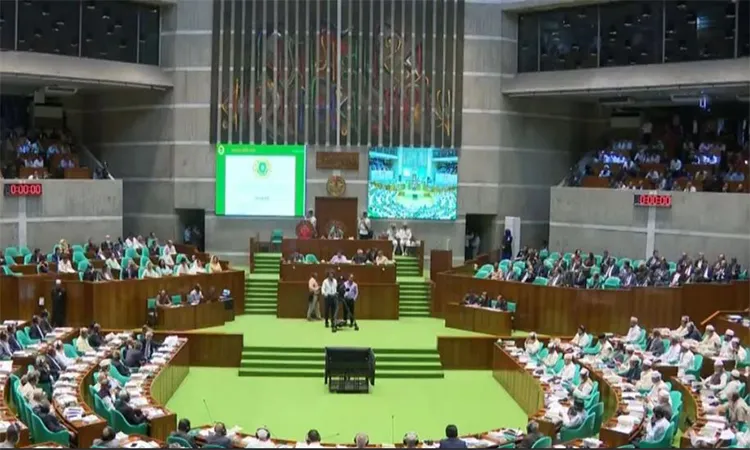
Home Minister Salahuddin Ahmed clarified on Sunday night that the ordinance used for the recently concluded referendum will not be introduced as a bill in Parliament, as its legal purpose has been served and the ordinance has expired.
Speaking to reporters following a three-hour special committee meeting at the Jatiya Sangsad Bhaban, the Minister explained that the ordinance was a temporary measure specifically designed for the one-time event.
Addressing questions regarding the legal status of the referendum, the Home Minister stated "The referendum for which the ordinance was created has already been held. No further referendums will be conducted under this specific framework. Therefore, there is no necessity to approve it again or formalize it into a permanent law."
He further noted that under Article 93 of the Constitution, ordinances must be decided upon within 30 days of a parliamentary session. Since the functional life of this ordinance has ended, it will be allowed to lapse.
The decision was not without friction. Jamaat-e-Islami members in the committee submitted a note of dissent (formal disagreement) regarding the government’s stance.
Out of the 133 ordinances issued by the interim government, the treasury bench and the opposition failed to reach a consensus on at least 15. Specifically, the government plans to amend ordinances related to The Human Rights Commission, The Appointment of Judges, Prevention of Disappearances
Jamaat-e-Islami representatives, including Md. Mujibur Rahman and GM Nazrul Islam, expressed their formal objections to these proposed changes during the session.
The Minister confirmed that while many of the 133 ordinances will be passed as they are, others will be introduced as amended bills. However, due to time constraints—with only 10 days remaining in the current session—not all can be processed immediately.
"Any ordinance that is not converted into a bill within the 30-day window will automatically lapse," the Minister clarified. "This is not a problem. We will reintroduce essential ones, such as those regarding delimitation or the Representation of the People Order (RPO), as new bills in the next session because they have long-term legal implications."
The meeting, chaired by Committee President Zainul Abedin, began at 8:30 PM and included Law Minister Md. Asaduzzaman and several other high-ranking officials.