Parliament witnessed a heated and procedural debate on Sunday over the implementation of the July National Charter (Constitution Reform) Implementation Order, 2025, before finally scheduling a two-hour discussion on March 31.
The debate was triggered by an adjournment motion submitted by Opposition Leader Dr Shafiqur Rahman under Section 62 of the Rules of Procedure. He called for suspending regular parliamentary business to discuss the delay in convening the Constitution Reform Council, a key body mandated under the July National Charter.
In his statement, Dr Rahman argued that the Charter carries democratic legitimacy, noting that around 70% of voters supported it in the referendum held alongside the 13th parliamentary election on February 12. As per the Charter, elected MPs are required to take dual oaths—as members of Parliament and the Constitution Reform Council. However, while 77 MPs from the Jamaat-led alliance complied, members of the BNP-led alliance refused to take the second oath.
He further pointed out that the Charter requires the Council’s first session to be convened within 30 days of election results, a deadline that has already passed, creating what he described as a “national deadlock.”
Law Minister Md Asaduzzaman supported the motion, calling it “logical and timely,” and emphasized the need for open debate to resolve confusion surrounding the Charter. He also suggested that MPs should be equipped with relevant documents during the discussion.
Following deliberations, Deputy Speaker Kayser Kamal fixed March 31 as the date for a two-hour debate, placing it as the final agenda of the day.
However, Home Minister Salahuddin Ahmed raised objections on procedural grounds. He argued that constitutional reform cannot be addressed through an adjournment motion under Rule 62, as such matters require legislative action. Citing Rule 63, he maintained that issues requiring legislation are barred from adjournment discussions and suggested Rule 68 as a more appropriate mechanism.
He further proposed forming an all-party Constitutional Reform Committee to build consensus. According to him, the July National Charter is a political agreement, not a legally binding constitutional amendment. Any changes must go through formal legislative procedures in Parliament.
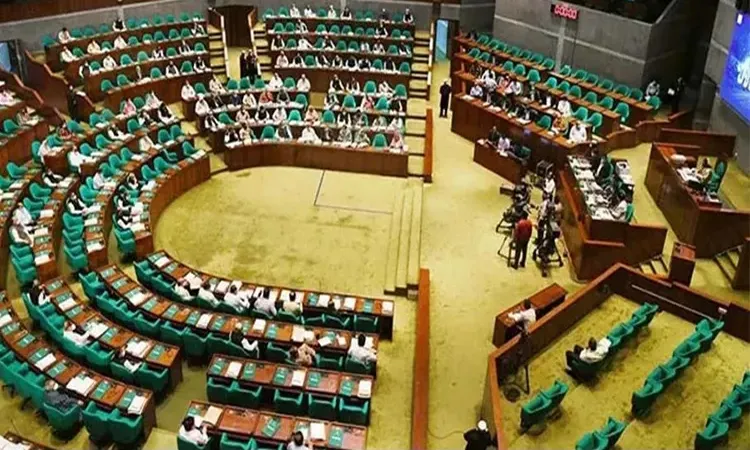
His remarks sparked protests from opposition MPs, leading to disorder in the House. The Speaker intervened, urging calm and allowing the minister to complete his statement. At one point, the Home Minister sought protection from interruptions.
Ahmed clarified that his stance was not against reform but in favor of following due parliamentary process. He stressed the need for inclusive consultations involving experts, political parties, and civil society to ensure sustainable constitutional changes.
In response, Dr Rahman questioned the reopening of the issue after the Speaker’s ruling. The Deputy Speaker reaffirmed that the decision had already been made and asked both sides to take their seats, bringing the session under control.