President Donald Trump’s conduct during the ongoing war with Iran is causing a historic rift between Washington and its long-standing allies.
From pulling troops out of Germany to dismissing attacks on Gulf partners, the administration's recent actions have revived fears that the United States may no longer be a reliable partner in a crisis.
Tensions peaked following the February 28 joint U.S.-Israel strikes on Iran. The subsequent retaliatory closure of the Strait of Hormuz by Tehran triggered a global energy crisis, leaving European economies reeling.

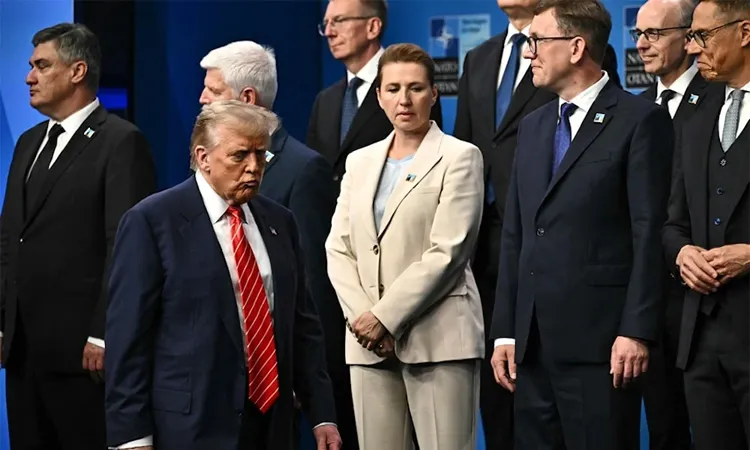
The relationship soured further this week after Trump announced the withdrawal of 5,000 U.S. troops from Germany. The move followed a public disagreement with German Chancellor Friedrich Merz. Trump has also threatened to reduce forces in Italy and Spain, questioning the necessity of NATO’s mutual defense clause (Article 5) after some allies denied the U.S. use of their airspace for the war.
The unease is not limited to Europe: The Gulf: In the UAE, officials are alarmed by Trump’s dismissal of recent drone attacks on the Fujairah oil port as "minor," despite significant damage. Asia: Japan and South Korea, heavily dependent on Middle Eastern oil, worry that U.S. economic vulnerability—evidenced by rising domestic fuel prices—might make Washington hesitant to assist in future conflicts, such as a crisis in the Taiwan Strait.
While the U.S. grapples with its allies, adversaries are watching closely. Russia has benefited from the surge in energy prices, while China is positioning itself as a more "stable" global partner. Analysts warn that the U.S. focus on Iran has diverted military assets from the Indo-Pacific, potentially emboldening coercive moves by other regional powers.
As European "middle powers" begin to discuss self-reliance and joint defense independent of Washington, the enduring legacy of the Iran war may be the permanent erosion of the post-WWII global order.