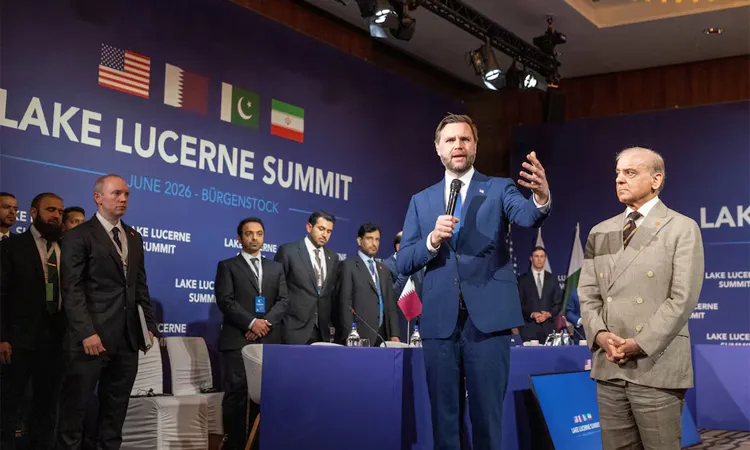
US and Iranian officials reported unexpected progress after the first day of high-stakes peace talks in Switzerland, despite rising regional tensions and stark threats from US President Donald Trump.
Mediated by Qatar and Pakistan, the negotiations established a 60-day roadmap aiming for a comprehensive final deal. A primary focus of the talks is the ongoing conflict in Lebanon between Israel and Iran-backed Hezbollah. To prevent further escalation, the US and Iran agreed to create a “de-confliction cell” alongside the Lebanese government. Additionally, a direct communication line will be established to avoid military accidents in the highly contested Strait of Hormuz.

The talks initially faced severe hurdles. Over the weekend, Iran threatened to block the Strait of Hormuz in protest of Israeli strikes in Lebanon that killed over 30 people, which Tehran argued breached a prior ceasefire agreement. In response, President Trump issued harsh warnings on social media, threatening massive retaliation if the strait was obstructed. The diplomatic friction caused the Iranian delegation to briefly pause direct negotiations, relying instead on mediators to keep discussions alive.
US Vice President JD Vance is leading the American delegation, joined by special envoy Steve Witkoff and Jared Kushner. The Iranian team is represented by Foreign Minister Abbas Araghchi and Parliamentary Speaker Mohammad Bagher Ghalibaf.

Moving forward, the 60-day roadmap will attempt to address Iran's nuclear program. Araghchi claimed Tehran has already secured US waivers allowing for oil exports and the release of frozen financial assets, though Washington has not yet confirmed these concessions. Lower-level technical discussions will continue throughout the week.