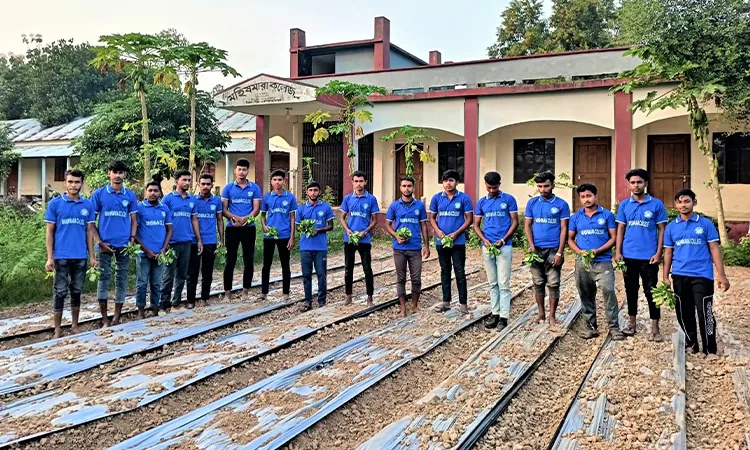
While youth nationwide increasingly struggle with digital screen addiction students at Mahishamara College in Tangail are trading their smartphones for hoes and spades. Located in the remote region of Madhupur upazila, this institution has introduced a unique agricultural education program to combat excessive device usage and build practical life skills.
The college was established in 2013 by Chanowar Hossain a National Agriculture Award-winning model farmer. Recognizing the lack of accessible higher education for poor farming families in his village—situated 50 kilometers from Tangail city—Hossain donated his family land to build the institution. Today it serves over 300 students.
Beyond standard academics the college features a dedicated "productive education corner." Here students learn hands-on techniques for growing pesticide-free vegetables, fruits, and spices. Hossain personally instructs them on soil preparation, seed sowing, and sustainable farming methods during their breaks and after classes.
"This initiative saves students from the harmful impacts of internet addiction while teaching them to grow safe chemical-free crops" said College Principal Abdur Razzak Hanan. Students report using these new skills to cultivate home gardens, bringing financial and practical relief to their parents.
Madhupur Upazila Nirbahi Officer (UNO) and College President Md. Saiful Islam praised the initiative. He noted that since traditional employment is not always guaranteed equipping youth with agricultural expertise empowers them to become independent entrepreneurs in Bangladesh's agrarian economy.
This practical approach not only protects students' physical and mental health but also prepares a skilled generation to lead the country’s agricultural sector forward.