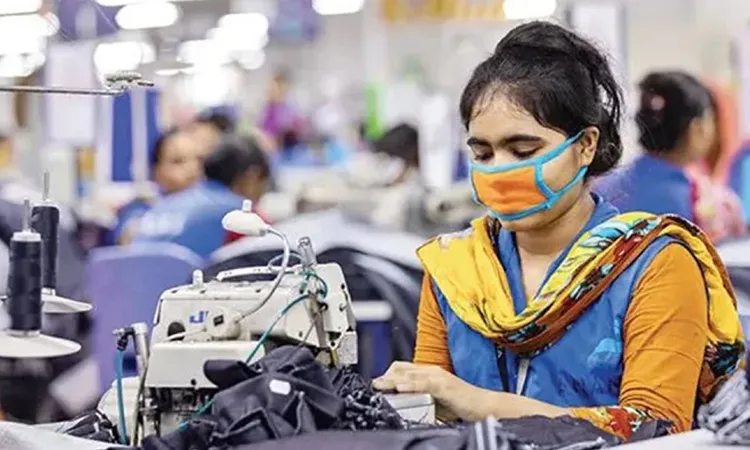
South Korea sees immense potential in transitioning Bangladesh’s ready-made garment (RMG) industry into a high-value technology-driven sector. According to Lee Sung-hun Deputy Director of KOTRA Dhaka Korean firms are eager to expand investments and technical cooperation in man-made fibers (MMF) technical textiles and automated manufacturing.
Currently the RMG sector drives 84% of Bangladesh’s exports and 10% of its GDP. However it remains heavily reliant on natural fibers yielding an average value addition of only 30%. Lee noted that shifting to MMF and functional fabrics—areas where South Korea holds a global competitive edge—is crucial for Bangladesh to climb the global value chain and meet changing buyer demands.
Modernizing the industry through automated cutting eco-friendly designs and transparent supply chains will also prepare Bangladeshi manufacturers for stringent new European Union regulations including the upcoming Digital Product Passport (DPP). KOTRA is actively assisting local factories in improving energy efficiency adopting solar power and upgrading wastewater treatment to align with these global compliance standards.
Beyond apparel Lee highlighted highly promising sectors for future foreign direct investment (FDI) including pharmaceuticals biotechnology ICT infrastructure and renewable energy. A growing middle class is also driving demand for fast-moving consumer goods (FMCG) and K-Beauty products.
While the upcoming Comprehensive Economic Partnership Agreement (CEPA) promises to strengthen bilateral trade Lee stressed that structural reforms are necessary to attract robust FDI. Ensuring consistent regulatory policies simplifying certification processes and guaranteeing smooth profit repatriation will be vital for unlocking the next chapter of South Korea-Bangladesh economic relations.