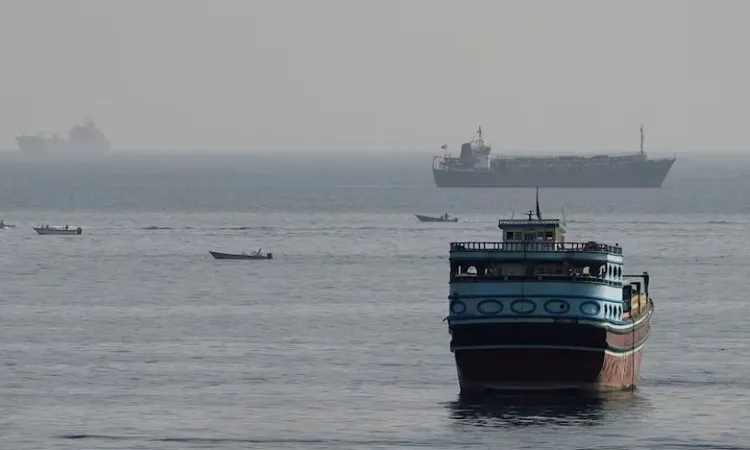
Conflicting signals from the US and Iran over potential peace talks have heightened global uncertainty even as a fresh shipping attack in the strategic Strait of Hormuz highlights ongoing risks to energy markets.
US President Donald Trump announced that negotiations were underway, warning Tehran of a "last chance" to secure a deal. Trump claimed the talks were requested by regional players including Saudi Arabia the UAE and Qatar. However Iran flatly denied any active or planned negotiations. Iranian spokesperson Baghaei confirmed that negotiators remain in the country noting the only active discussions are with Oman regarding the management of the Strait of Hormuz.
Compounding the tension, the UK Maritime Trade Operations (UKMTO) reported that a cargo vessel was struck by an unknown projectile off Oman's coast. Shipping traffic through the vital waterway remains slow, with only six vessels transiting. The route is critical normally carrying one-fifth of global crude oil and natural gas shipments.
Despite the mixed diplomatic signals global markets reacted with cautious optimism. Brent crude oil futures fell roughly 7% to $83.77 a barrel while the Dow closed at a record high driven by hopes of a potential resolution.
The five-month-old war, which began with Trump’s "Operation Epic Fury" alongside Israel remains deadlocked. While Washington asserts that a June memorandum required Iran to open the strait Tehran insists it maintains authority over the waterway. Analysts suggest Iran is betting it can outlast US pressure by targeting regional trade and shipping lanes to raise the cost of confrontation.