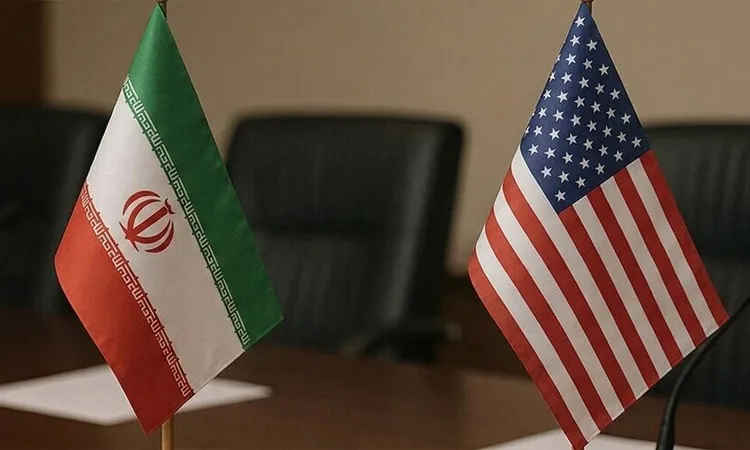
Conflicting signals from Tehran, Washington and regional mediators have left the status of a proposed US–Iran peace deal unclear, even as US President Donald Trump insists the agreement is ready for signing.
Iran's Fars News Agency reported on Sunday that Tehran has "not yet announced its final decision" on the memorandum of understanding aimed at ending the Middle East war. A source close to the negotiating team said the political, legal and technical aspects of the proposal are still under review at both expert and decision-making levels.
The report reflects resistance from hardline factions inside Iran, who fear the deal could weaken Tehran's control over the Strait of Hormuz, a vital oil shipping route.
Trump wrote on Truth Social on Saturday that the deal was "scheduled to get signed" on Sunday, adding that the Strait of Hormuz would reopen to all traffic immediately afterward. He has made similar predictions since an April ceasefire, though earlier deadlines have slipped.
Pakistan, which has led mediation efforts, also said on Saturday that the deal could be finalised within 24 hours. Prime Minister Shehbaz Sharif said Islamabad was preparing for an electronic signing.
However, Iranian Foreign Ministry spokesman Esmaeil Baghaei pushed back on the timeline, saying no Iranian delegation would travel for a signing ceremony and that a signing "will not be tomorrow." He said the agreement "has never been closer" but is not yet ready for conclusion, though he did not rule out a signing "in the coming days."
A Qatari delegation arrived in Tehran on Sunday as part of ongoing mediation, described by Iranian media as aimed at finalizing the agreement.
Officials familiar with the talks say the proposed framework would reopen the Strait of Hormuz, extend the existing ceasefire, and open further negotiations on Iran's nuclear programme and US sanctions relief. Neither side has released the full text.
Diplomats caution the deal remains fragile, with unresolved disputes over sanctions, uranium stockpiles and regional security issues including tensions in Lebanon that could still derail it.
The mixed messaging has also exposed divisions inside Iran, where conservative lawmakers and IRGC-linked media have criticized the proposed terms as too generous to Washington.
With no joint text published and no confirmed signing venue, officials on both sides appear to be managing public expectations even as talks continue. As of Sunday, Iranian officials maintain a deal is close but not yet finalized.