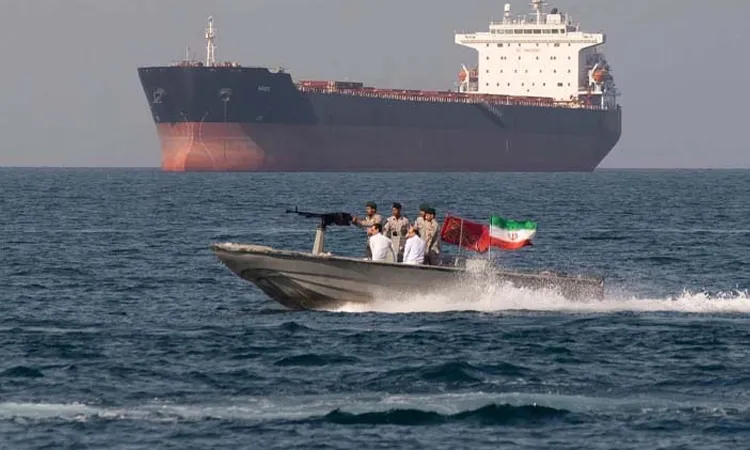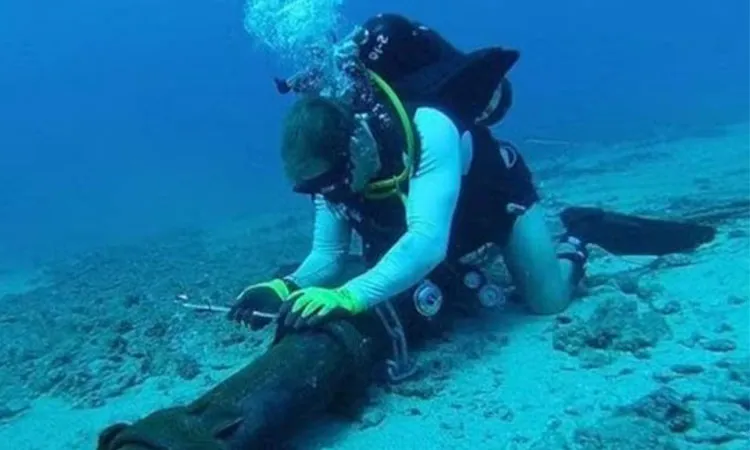
An Iranian news agency linked to the Islamic Revolutionary Guard Corps (IRGC) has published a detailed map of the Persian Gulf’s undersea internet cables, a move seen by analysts as a veiled threat to the region’s digital infrastructure.
The report by Tasnim News Agency, titled ‘The Strait of Hormuz, the Core Artery of Internet Cables for Persian Gulf Coastal States’ warns that the narrow waterway is a critical "bottleneck" for global data. It argues that while the Strait is famous for oil transit, it is equally vital as a corridor for the digital backbone of the UAE, Qatar, Bahrain, Kuwait and Saudi Arabia.

According to the report, at least seven major submarine cable systems including FALCON, AAE-1 and SEA-ME-WE pass through the Strait. Tasnim points out that the southern Gulf states are significantly more dependent on these maritime routes than Iran is.
"The concentration of many internet cables in this narrow waterway has made the Strait of Hormuz a vulnerability for the Middle East’s digital economy " the outlet stated, noting that damage to these assets could cause a "digital disaster" paralyzing stock markets in Dubai and Doha and disrupting regional aviation.
The publication comes amid heightened tensions and follows reports of Iranian drone strikes targeting commercial cloud facilities such as Amazon Web Services (AWS) nodes in the UAE and Bahrain. By mapping landing stations and data hubs, Iran-linked media appears to be adding digital infrastructure to the list of strategic pressure points alongside shipping lanes and energy facilities.
Experts note that unlike oil, which can sometimes be rerouted, 99% of international data relies on these cables. Repairing them is a complex process involving specialized vessels and can take months, potentially causing longer-lasting economic damage than an energy blockade.
While Tasnim stops short of an explicit threat to sever the lines, the timing coupled with recent cable disruptions in the Red Sea and Baltic Sea has raised alarms. The agency concluded that in the event of a "Hormuz crisis" the Arab states would suffer far more than Iran which maintains less reliance on these specific southern routes.