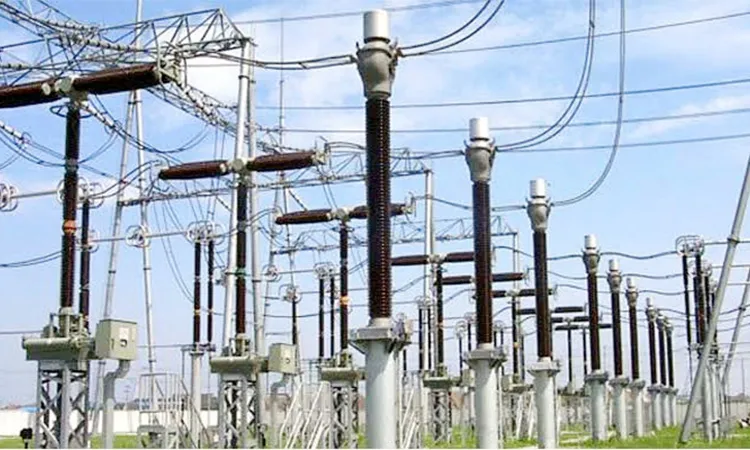
Power shortages are intensifying in Chattogram as 9 of the region’s 28 power plants remain shut, disrupting daily life and essential services.
Frequent load shedding has made it difficult for residents to access water, as many households rely on electric pumps connected to WASA and deep tube wells. The crisis comes at a critical time, with SSC and equivalent exams underway, adding pressure on students.
Despite past practices of ensuring uninterrupted electricity during public exams, no such directive was issued this year. Teachers, students, and guardians have expressed concern. However, the Chattogram Education Board has requested uninterrupted power supply from the Bangladesh Power Development Board (BPDB).
Temperatures in the city are hovering between 34°C and 36°C, making both outdoor and indoor conditions uncomfortable without reliable electricity.
According to BPDB data, load shedding rose sharply from 54 MW on April 3 to 282 MW on April 14—more than a fivefold increase within 11 days. During the same period, power generation dropped significantly. Output fell from 3,408 MW on April 4 to 1,470 MW on April 14.
On April 18, electricity demand in Chattogram reached 1,445 MW, but supply was limited to 1,338 MW, resulting in a shortfall of 148 MW.
Md. Kamal Uddin Ahmed, Chief Engineer of BPDB’s Chattogram Southern Region, said the city is receiving 50 to 200 MW less than required from the national grid daily. He explained that locally generated electricity is fed into the national grid, and Chattogram receives power through central distribution rather than direct allocation.
The supply crisis is linked to fuel shortages and falling water levels in Kaptai Lake. On April 2, five plants were shut due to these constraints. By April 18, the number of operational plants dropped to 19, with total generation declining by about 1,000 MW within two weeks.
Coal-based plants had briefly offered some relief, but output has also declined. The SS Power Plant in Banshkhali, which previously generated 1,164 MW, produced only 586 MW recently.
Several plants remain fully or partially inactive, including Raozan-1 and Raozan-2. At the Kaptai Hydropower Plant, only two of five units are operational due to low water levels. Private plants such as Judiak, Julda-2, and Julda-3 are also offline. Renewable energy output has dropped, with the Teknaf solar plant failing to supply power on April 18.
Demand for electricity continues to rise due to increasing use of cooling devices, irrigation needs for boro cultivation, and higher industrial consumption. However, generation capacity is not keeping pace, worsening the supply gap.